


Sustainable Building & Green Homes in New Hampshire: Comprehensive Guide to Certifications, Materials, Costs & ROI
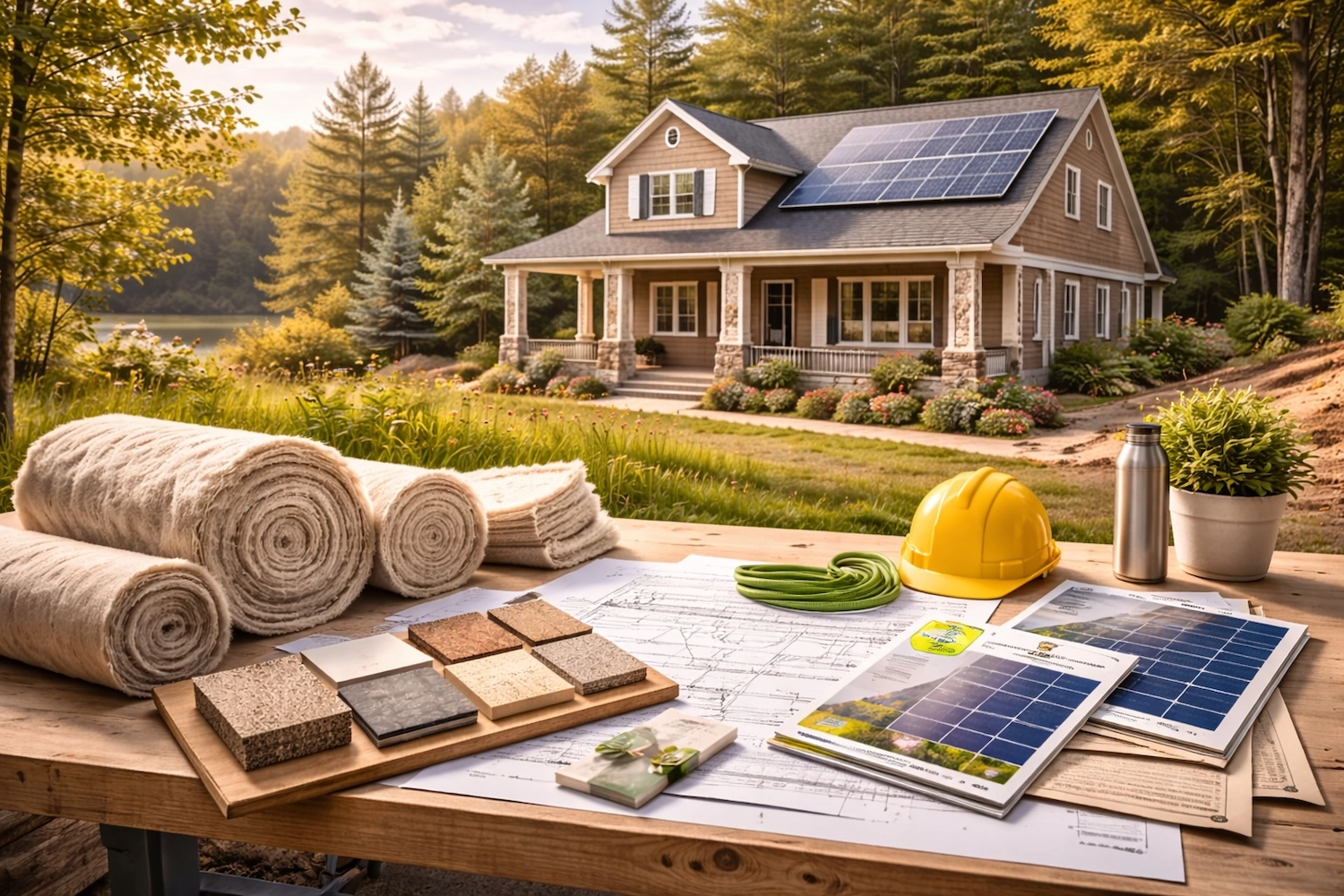
Sustainable building practices are no longer niche trends; they represent a fundamental shift in how homeowners approach real estate investment and environmental responsibility. In New Hampshire, where the median home price has reached $535,000 and building permits recently hit a 20-year high of 5,822, green building offers a compelling value proposition: lower operating costs, improved health outcomes, greater resilience, and often premium resale value. This comprehensive guide explores what it means to build or renovate a green home in the Granite State, covering certifications, materials, incentives, financial considerations, and practical strategies for buyers and builders seeking to create sustainable, energy-efficient homes.
Understanding Sustainable Building: Definitions & Core Principles
At its core, sustainable building aims to minimize negative environmental impacts while improving occupant wellbeing and maintaining or enhancing economic viability. A sustainable home is designed, constructed, and operated with careful attention to energy efficiency, water conservation, material selection, indoor air quality, and site usage. The goal is to reduce the home’s carbon footprint over its entire life cycle—from raw material extraction through construction, operation, renovation, and eventual reuse or disposal.
Sustainable building is more than a single strategy; it encompasses an integrated approach. High-performance insulation reduces heating and cooling loads. Passive solar design minimizes mechanical heating needs. Renewable energy systems offset grid electricity consumption. Water management systems reduce demand on municipal or septic systems. Native landscaping eliminates the need for irrigation and chemical inputs. Together, these strategies create homes that are comfortable, healthy, durable, and economical to operate across decades of occupancy.
Third-Party Green Certifications in New Hampshire
Green certifications signal to buyers, lenders, and inspectors that a home meets documented standards for sustainability performance. While not all sustainable homes pursue formal certification, understanding these programs is essential for evaluating builder claims, securing favorable mortgage terms, and protecting long-term resale value.
LEED (Leadership in Energy and Environmental Design)
LEED is one of the most widely recognized green building certifications globally, administered by the U.S. Green Building Council. LEED rates buildings on a comprehensive point system across multiple categories: energy efficiency, water efficiency, materials and resources, indoor air quality, location and transportation, and sustainable sites. For residential projects, LEED offers four achievement levels—Certified, Silver, Gold, and Platinum—with higher tiers requiring more stringent performance targets.
LEED v4.1, released in March 2024, introduced significant updates to energy credits, splitting the Optimize Energy Performance credit into two components: energy efficiency improvement (worth up to 9 points) and greenhouse gas emissions reduction (worth another 9 points). The newer LEED v5 framework, also released in 2024, places even greater emphasis on decarbonization, operational carbon tracking, and continuous performance verification—making LEED certification increasingly important for homes seeking to demonstrate long-term environmental performance.
ENERGY STAR Certification
ENERGY STAR, administered by the U.S. Environmental Protection Agency, certifies homes that meet strict guidelines for energy efficiency. ENERGY STAR homes typically feature high-performance windows (often triple-pane or with low-emissivity coatings), advanced insulation (R-value 15+ in walls, R-38+ in ceilings), efficient HVAC systems with variable-speed motors, properly sealed and insulated ductwork, and airtight building envelopes. ENERGY STAR-certified homes typically use approximately 15-20% less energy than code-built homes, translating to hundreds of dollars in annual utility savings. For NH homeowners, this efficiency is particularly valuable given the state’s heating-dominated climate and increasingly expensive energy costs.
Passive House (PHIUS & PHI Certifications)
Passive House certifications set among the most rigorous performance standards in the building industry. Passive House design emphasizes extremely tight building envelopes, superior insulation (U-values of 0.10 or less for windows), air-sealing to less than 0.6 air changes per hour at 50 pascals pressure, and continuous ventilation with heat recovery. These homes maintain comfortable indoor temperatures with minimal mechanical heating or cooling—ideal for New Hampshire’s cold winters and variable seasonal conditions.
Passive House certification is issued by two organizations in the United States: PHI (Passive House Institute) and PHIUS (Passive House Institute U.S.), with slightly differing standards. PHIUS standards account for climate variations, making them particularly suitable for cold climates like New Hampshire. Recent market data shows growing interest in Passive House certification in northern New England, with developers and homeowners recognizing its value for cold-climate resilience and minimal operating costs.
A significant development: project teams pursuing Passive House US certification can now use the performance standard to earn credit toward LEED certification, creating a complementary pathway for homeowners seeking recognition from multiple certification bodies.
National Green Building Standard (NGBS)
Developed by the National Association of Home Builders (NAHB), the NGBS provides a rigorous, market-driven certification focused on site design, resource efficiency, energy efficiency, water efficiency, indoor air quality, and homeowner education. The NGBS uses a tiered rating system (Bronze, Silver, Gold, and Platinum) similar to LEED, making it easily understood by consumers and real estate professionals. Many NH builders favor NGBS for its flexibility and practical applicability to local construction practices.
Living Building Challenge
The Living Building Challenge represents one of the most stringent certifications available, demanding net-positive energy performance (homes must produce more energy than they consume), water neutrality (zero net water consumption), nontoxic materials throughout, equitable access, and responsible site practices. While rare for residential properties due to its demanding standards, the principles of Living Building Challenge increasingly inspire custom builds and renovations by homeowners committed to maximum environmental performance.
Green Certifications and Financial Value
Third-party certifications increasingly influence real estate value. Studies show that LEED-certified homes sell 3-5% faster and often command 5-10% price premiums compared to non-certified alternatives. ENERGY STAR homes demonstrate similar patterns. For NH buyers, certification provides competitive advantage in a market where 5,822 building permits were issued in recent periods—indicating active new construction and buyer choice.
Sustainable Building Materials: Selection, Costs & Performance
Material selection is foundational to sustainable building. The materials chosen for a home have lasting consequences for environmental impact, structural longevity, occupant health, and life-cycle operating costs. Selecting materials that are sustainably sourced, durable, low in VOCs (volatile organic compounds), and responsibly manufactured is a cornerstone of green building.
Sustainably Harvested Wood & Timber Products
Wood remains the dominant structural material in residential construction. Sustainable forestry matters enormously. Look for lumber certified by the Forest Stewardship Council (FSC), which ensures the wood comes from responsibly managed forests with documented harvesting practices, ecosystem protections, and worker protections. FSC-certified lumber typically costs 5-15% more than uncertified alternatives, but provides environmental and ethical assurance.
Engineered wood products offer performance benefits and material efficiency. Cross-laminated timber (CLT) uses smaller pieces of wood layered and glued to produce strong, stable panels suitable for walls, floors, and roofs. CLT requires less raw material than solid timber while providing superior dimensional stability and strength-to-weight ratios. For NH builders, CLT enables faster construction timelines and superior thermal mass performance in winter climates.
Mass timber products, including CLT, are capturing growing market share in sustainable construction. The global sustainable construction materials market reached USD 429.83 billion in 2024 and is projected to reach USD 1,400.77 billion by 2034—a compound annual growth rate of 12.54%. Within this market, bamboo alone represented 40.19% of material demand in 2024, demonstrating strong market momentum for sustainably sourced alternatives to conventional materials.
Recycled Steel & Metal Materials
Steel framing offers multiple sustainability advantages. Steel is highly recyclable and can be reused indefinitely without losing structural integrity. Recycled steel reduces demand for new ore extraction, lowers embodied carbon from mining and refining, and decreases energy consumption compared to virgin steel production. Steel framing resists pests, fire, and rot—addressing durability concerns in NH’s humid, variable climate. While steel framing remains less common in residential construction than wood, its performance and recyclability make it increasingly attractive for premium builds.
Recycled aluminum provides another durable option for window frames, roofing, gutters, and trim. Like steel, aluminum is infinitely recyclable without performance degradation. Recycled aluminum content typically ranges from 30-75% depending on product, with higher recycled content reducing energy embodied in manufacturing.
High-Performance Insulation Materials
Insulation improvements have dramatic impacts on heating/cooling performance. Cellulose insulation, made from recycled paper, provides R-values of approximately 3.6 per inch at reasonable cost ($0.50-$0.80 per square foot installed), making it an economical green choice. Sheep’s wool offers R-values near 3.5 per inch with superior moisture management and zero toxicity concerns—valuable for indoor air quality but costing $1.50-$2.50 per square foot installed. Mineral wool (stone or glass wool) delivers R-values of 3.2-3.8 per inch, excellent fire resistance, and cost-effectiveness at $0.40-$0.75 per square foot.
Spray polyurethane foam (SPF) insulation provides the highest R-value performance (R-6.5-7.0 per inch) but requires specification of low-GWP (global warming potential) formulations to minimize environmental impact. For NH builders, higher R-values reduce heating season demand—one of the greatest energy loads in northern climates. The tradeoff between upfront insulation cost and lifetime heating savings typically favors upgrading to premium insulation, with payback periods of 5-10 years through reduced energy bills.
Low-VOC Paints, Sealants & Finishes
Traditional paints and sealants often emit toxic volatile organic compounds that off-gas for months or years, degrading indoor air quality. Low-VOC (<50 g/L) and zero-VOC (<5 g/L) options improve health outcomes, benefiting residents, especially those with allergies, respiratory sensitivities, or chemical sensitivities. Low-VOC paint costs approximately 20-30% more than conventional options ($30-$40 per gallon vs. $20-$25), but this premium is small relative to total project costs and provides measurable health benefits. Major paint manufacturers including Sherwin-Williams, Benjamin Moore, and Farrow & Ball now offer comprehensive zero-VOC lines, making sustainable finishes readily available.
Reclaimed & Salvaged Materials
Reusing brick, hardwood flooring, timber beams, and architectural elements from demolished structures adds character while diverting waste from landfills. New England’s industrial heritage provides abundant sources of reclaimed materials from old barns, textile mills, factories, and homes. Reclaimed hardwood flooring, for example, often costs $6-$12 per square foot (compared to $3-$8 for new hardwood), but provides superior grain character, durability, and embodied carbon advantages. Reclaimed timber beams, salvaged brick, and period architectural elements increasingly feature in premium green builds, appealing to NH homeowners seeking authentic character and environmental responsibility.
Renewable Flooring: Bamboo & Cork
Bamboo and cork represent fully renewable flooring alternatives. Bamboo grows rapidly—some species reaching harvest maturity in 3-5 years—and can be harvested multiple times from the same root system. Bamboo flooring typically costs $3-$8 per square foot installed, comparable to mid-range hardwoods, while providing hardness and durability suitable for active households. Bamboo production has expanded significantly, with the global bamboo materials market now valued at over USD 214.3 billion and projected to grow substantially through 2034.
Cork is harvested from the bark of cork oak trees without killing or significantly damaging the tree itself. The harvesting process can be repeated every 9-12 years throughout the tree’s 200-year lifespan, making cork a truly regenerative material. Cork flooring typically costs $4-$10 per square foot installed and provides a warm, resilient, naturally antimicrobial surface ideal for kitchens and bathrooms. For NH homeowners, cork’s elasticity provides comfort underfoot while its inherent insulating properties contribute to thermal comfort.
Design Strategies for Energy Efficiency: Beyond Materials
Sustainability extends beyond material selection to encompass site design, building orientation, and systems integration. The most efficient materials cannot overcome poor site planning or ineffective design strategies.
Passive Solar Design & Site Orientation
In northern climates like New Hampshire, site orientation offers tremendous energy advantages. Orienting homes to maximize southern exposure allows passive solar gain through appropriately sized, high-performance south-facing windows. These windows capture low-angle winter sun when heating demand is greatest, while summer sun—at higher angles—is rejected by roof overhangs. This design principle, refined over centuries in northern architecture, requires no mechanical systems yet delivers substantial heating benefits.
Effective passive solar design requires windows with low solar heat gain coefficients (SHGC) for non-south-facing exposures while prioritizing high SHGC on south-facing windows in heating climates. Triple-pane windows with selective coatings and insulated frames (U-values below 0.20) represent the baseline for passive solar performance. For a typical NH home, properly designed passive solar can reduce heating demand by 15-25% without increasing heating equipment size.
Advanced Air Sealing & Building Envelope Performance
A tight building envelope is foundational to efficient homes. Air sealing combines multiple strategies: sealed rim joists, caulked penetrations, taped drywall joints, sealed electrical outlets and switch plates, sealed HVAC returns, and continuous insulation at transitions. The goal is achieving air leakage below 7 air changes per hour at 50 pascals (ACH50) for standard construction or below 0.6 ACH50 for Passive House performance.
Blower door testing measures building tightness and identifies remaining leakage paths. A standard NH home might test at 12-15 ACH50 initially; professional air sealing typically reduces this to 5-8 ACH50 at moderate cost ($500-$2,000 for a retrofit). The energy savings from reaching 5 ACH50 versus 10 ACH50 alone can total 10-15% of heating and cooling demand.
Proper air sealing must accompany controlled ventilation using Energy Recovery Ventilators (ERVs) or Heat Recovery Ventilators (HRVs). These devices extract stale interior air while pre-conditioning fresh incoming air using waste heat, maintaining indoor air quality without the thermal penalty of uncontrolled infiltration. For NH homeowners, ERV systems cost approximately $2,500-$5,000 installed but prevent moisture accumulation, reduce allergen levels, and enable super-efficient home designs.
Solar Photovoltaic Systems & Net Metering in New Hampshire
Solar energy represents the most accessible renewable technology for NH homeowners. The state receives approximately 4.5 peak sun hours daily on average, making solar economically viable across most regions. Designing homes with future solar readiness—including conduit runs, structural supports, and electrical infrastructure—simplifies later PV installation.
For installed systems, New Hampshire offers net metering—a critical incentive allowing homeowners to offset grid electricity consumption with solar generation. Under net metering, when a solar array produces more electricity than the home consumes, excess power flows to the grid and the utility provides energy credits at retail rates. These credits offset future electricity consumption, particularly valuable in winter when solar production decreases. Net metering credits carry forward indefinitely in NH, though credits are valued at approximately 75% of retail rates (Transmission + Distribution charges do not accrue), effectively providing a 25% discount on surplus generation.
Solar Costs & Federal Incentives (2025-2026)
Solar installation costs have declined consistently. Current average installation costs in New Hampshire are approximately $3.03 per watt, translating to roughly $15,000 before incentives for a typical 5 kW system. The average NH home requires a 10.44 kW system to offset annual electricity consumption, with total installed cost before incentives of approximately $31,946.
Federal incentives significantly improve economics. The federal solar Investment Tax Credit (ITC), currently at 30%, reduces the $31,946 cost to approximately $22,360 after incentives. However, homeowners should note that this credit is set to expire: President Trump signed legislation eliminating the residential solar tax credit entirely starting January 1, 2026. Therefore, homeowners installing systems in 2025 can claim the 30% credit, while 2026 installations will no longer qualify. This creates urgency for homeowners considering solar.
New Hampshire’s state-level solar rebate program, which offered $0.20 per watt, was repealed in 2024 by Senate Bill 303, and the NH Department of Energy has confirmed the program is permanently closed. This further underscores the importance of federal credits available through 2025.
Application fees for new net metering installations became effective January 1, 2025, adding a small barrier, but net metering’s value—particularly with indefinite credit carryforward—remains compelling for most NH properties.
Water Management Systems & Low-Flow Fixtures
Water conservation reduces demand on municipal water systems and septic systems—increasingly important in NH communities with aging infrastructure. Strategies include rain gardens that capture roof runoff, permeable pavers that allow groundwater recharge, green roofs that retain rainfall, and low-flow fixtures reducing indoor consumption.
Low-flow faucets (1.5 gallons per minute or less) and showerheads (2.0 gallons per minute or less) reduce hot water demand by 30-50%, translating to lower water heating costs and reduced strain on septic systems. For septic-served homes (common in rural NH), reduced water volume extends system lifespan significantly. Installation cost is minimal—$20-$40 per fixture—while savings accumulate across years.
Native Landscaping & Biodiversity
Native plant landscaping reduces irrigation needs, eliminates chemical pesticides and fertilizers, and supports local biodiversity. Species adapted to NH’s climate require minimal supplemental water once established. Replacing conventional turf with native meadows, shrub communities, or woodland understory plants reduces maintenance costs while enhancing property aesthetics and wildlife habitat. For new construction, native landscaping design costs approximately $500-$1,500, with plants costing $1-$3 per square foot—comparable to conventional landscaping yet delivering long-term ecological and economic benefits.
Financial Dimensions: Cost Premiums, ROI & Payback Periods
Understanding the economics of green building is essential for informed decision-making. Upfront costs differ from long-term value, and financing options have expanded dramatically.
Green Building Cost Premiums
Industry research indicates that green building typically costs 5-10% more upfront compared to code-built homes, depending on certification level and material selections. For a median NH home valued at $535,000, this premium totals $26,750-$53,500. However, this investment generates substantial returns through operational savings and intangible benefits.
Cost analysis shows moving from 2018 IECC building code standards to 2024 IECC standards would have only a 0.2% impact on upfront construction cost—approximately $1,070 on a $535,000 home—while immediately reducing operating costs by approximately 15%. This 15% energy savings translates to $700-$1,200 annually for typical NH homes, depending on fuel costs and heating/cooling loads.
Long-Term ROI & Lifetime Benefits
Green building investments deliver exceptional lifetime returns. Research in New Hampshire specifically documents that since 2012, every dollar invested in energy efficiency has generated $3.66 in lifetime benefits. This represents more than 266% return on efficiency investments—far exceeding returns from most alternative investments.
For a $40,000 green building investment ($535,000 home × 7.5% premium), this translates to approximately $146,400 in lifetime benefits through reduced energy costs, improved health, avoided maintenance, and enhanced property value. The payback period for many efficiency improvements is 5-10 years, after which benefits accumulate at no additional cost.
Reducing Effective Home Costs
Green mortgage programs allow borrowers to finance efficiency upgrades, recognizing that reduced operating costs enable higher borrowing capacity. Conventional mortgages typically qualify borrowers based on income-to-debt ratios; green mortgages factor in documented energy savings, increasing qualifying income for efficiency-upgraded homes. This can enable borrowers to afford premium green homes that would otherwise exceed their financing capacity.
Example: A buyer with $500,000 borrowing capacity might qualify for $540,000-$560,000 in a green mortgage if the home’s documented annual energy savings exceed $2,400-$3,200. The reduced operating costs effectively expand borrowing capacity by 8-12%.
New Hampshire Utility Incentives: NHSaves Program
The NHSaves program—funded through a systems benefit charge on electric and natural gas utility bills—provides substantial rebates for efficiency improvements. NHSaves is administered by Eversource, Unitil, Liberty Utilities, and other utilities through the NH Public Utilities Commission framework.
Available rebates include up to $6,000 in combined incentives on overall improvement costs, covering improvements such as:
- Insulation & Air Sealing: Rebates for attic insulation, wall insulation, basement insulation, and air sealing projects. Amounts vary by improvement type and baseline conditions.
- HVAC Systems: Rebates for high-efficiency heat pumps, furnaces, and air conditioning systems. Heat pump rebates range from $300-$1,200 depending on system capacity and efficiency rating.
- Water Heating: Rebates for high-efficiency tank or tankless water heaters, including heat pump water heaters offering superior efficiency.
- Smart Thermostats: Instant rebates on qualifying smart thermostats (Google Nest, ecobee, Sensi) through the NHSaves online marketplace, with instant incentives available for customers of Liberty and Unitil.
- Lighting & Controls: Rebates for LED fixtures and advanced lighting control systems.
The average NH household utilizing multiple NHSaves rebates achieves total incentives of $2,500-$5,000, significantly reducing upgrade costs. For example, a comprehensive energy retrofit including insulation, heat pump installation, and smart thermostat might cost $12,000-$16,000 installed; NHSaves rebates could reduce net cost to $8,000-$11,000.
Federal Home Electrification & Appliance Rebates
The Home Efficiency Rebates Program, part of federal climate investment initiatives, is launching in New Hampshire with a targeted Spring 2026 rollout date. This program will provide rebates for heat pumps, heat pump water heaters, heat pump clothes dryers, electric stoves, weatherization improvements, and electrical infrastructure upgrades. Details remain under development by the NH Department of Energy, but rebate levels are expected to reach $1,000-$4,000 per improvement when launched.
New Green Financing for Residential Development
A significant 2025 development creates new financing pathways for green residential development in New Hampshire. Cities and towns can now designate "energy efficiency and clean energy districts," allowing developers to apply directly to the Business Finance Authority for funding to support residential projects in these zones. This program addresses NH’s acute housing shortage while advancing energy efficiency—particularly relevant given NH’s building permit activity at 20-year highs.
This financing mechanism reduces development costs for green projects and potentially increases feasibility for efficiency-focused developments in communities adopting the program.
New Hampshire Energy Code Status & Future Updates
Understanding current building code requirements provides context for green building valuations. New Hampshire adopted the 2021 International Building Code editions effective July 1, 2025, updating structural, mechanical, plumbing, and fire code requirements. However, the state maintained its Energy Code at the 2018 IECC standard—declining to adopt the 2024 IECC despite cost-benefit analysis showing minimal upfront cost increases (0.2%) and substantial operating cost reductions (15%).
Governor Sununu signed House Bill 1059 in August 2024 implementing these updates. The New Hampshire 2024 IECC Committee recommended not adopting the 2024 IECC, citing concerns about construction cost impacts on housing affordability. The Department of Public Service is required to submit a report by May 2026 exploring affordability impacts of building energy standards and recommending modifications for future updates.
This regulatory landscape means that homes built to 2024 IECC standards in New Hampshire will exceed current code requirements, positioning such homes for premium valuation and buyer preference.
Case Study: Net-Zero Certified Home in Rural New Hampshire
Consider a recently completed custom build in rural New Hampshire pursuing both National Green Building Standard (NGBS Platinum) and Passive House certification. The 2,400-square-foot home demonstrates integrated sustainable design:
Envelope Performance: Slab-on-grade foundation with exterior rigid insulation (R-15). Walls feature dense-packed cellulose insulation (R-20), triple-pane windows with U-values of 0.15, and continuous exterior air barrier. Testing shows air leakage of 0.5 ACH50—exceeding Passive House performance standards.
Mechanical Systems: A cold-climate air source heat pump (ASHP) with -25°F design temperature rating provides heating to 15 degrees without supplemental electric resistance. An Energy Recovery Ventilator supplies fresh, pre-conditioned air. A heat pump water heater provides domestic hot water with superior efficiency. Radiant floor heating in the main living areas provides comfort without forced air circulation.
Renewable Energy: A 12-kilowatt solar photovoltaic array on the south-facing roof produces approximately 14,000 kWh annually—exceeding the home’s net consumption of approximately 10,000 kWh. Battery backup (Tesla Powerwall 13.5 kWh) ensures resilience during grid outages. Excess production flows to the grid under net metering, providing year-round bill credits.
Water & Site: Rainwater harvesting captures roof runoff for landscape irrigation. Low-flow fixtures limit indoor consumption to 25 gallons per person daily. Native meadow landscaping replaces conventional turf, supporting pollinators and reducing maintenance to zero pesticide applications annually.
Materials & Finishes: FSC-certified lumber framing, recycled steel reinforcement, reclaimed hardwood flooring salvaged from a NH textile mill, zero-VOC paints and sealants, and natural wool insulation create a nontoxic, durable interior environment.
Performance & Economics: Modeled annual energy consumption is approximately 8,000 kWh (equivalent to 0.67 kWh per square foot—72% below code-equivalent construction). Annual utility costs total approximately $600 (net metering credits offset generation). Modeled annual CO₂ emissions are 0 tons (net-zero operation). The home cost $38,500 more than code-equivalent construction (7.1% premium on $535,000 base), with projected 12-year simple payback through avoided utility costs alone, before factoring in incentives, maintenance savings, or property value appreciation.
Resale Value & Market Demand for Green Homes
Green certification and efficiency increasingly influence home values and market time. Recent market analysis shows:
- LEED-certified homes sell 3-5% faster than comparable non-certified homes in competitive markets.
- ENERGY STAR certification correlates with 5-10% price premiums in many markets.
- Homes with documented energy performance data sell faster in competitive markets, as buyers increasingly request utility cost information.
- Certified green homes in New Hampshire—particularly near Portland, Portsmouth, and other high-demand areas—increasingly command premiums as buyer environmental consciousness increases.
For homeowners in NH’s competitive market (median price $535,000, homes selling in 46 days on average), green certification provides measurable competitive advantage and price enhancement.
Green Building in NH’s Regulatory Context
New Hampshire’s recent building code and zoning updates create favorable conditions for green development. House Bill 577 enables Accessory Dwelling Units (ADUs) statewide, while House Bill 631 authorizes mixed-use zoning—both supporting diverse housing typologies. Combined with energy code flexibility and utility incentives, these regulatory developments position NH as a favorable market for sustainable residential development.
The state’s lack of income and sales taxes (enabling no tax on wages or sales) provides additional financial advantage to NH residents compared to neighboring states, effectively increasing affordability of energy-efficient improvements.
Overcoming Common Green Building Barriers
While green building offers substantial benefits, common barriers include:
- Upfront Cost Premium: Addressed through green mortgages, NHSaves rebates, and federal incentives that typically offset 30-50% of upgrade costs.
- Builder Experience: Addressed by working with certified green builders, energy auditors, and organizations like the Home Builders & Remodelers Association chapters in NH.
- Complexity: Addressed through third-party certifications (LEED, NGBS, Passive House) that provide frameworks and verification, reducing uncertainty.
- Long Payback Periods: Addressed by recognizing that true payback periods for many improvements (5-10 years) are substantially shorter than home ownership periods, and by documenting lifetime benefits ($3.66 per efficiency dollar invested in NH).
Conclusion: Green Building as Investment & Legacy
Sustainable building in New Hampshire is fundamentally a smart investment—for occupant health, financial returns, environmental stewardship, and long-term property value. From pursuing recognized certifications (LEED, ENERGY STAR, Passive House, NGBS) to selecting eco-friendly materials, designing for passive solar gain, installing renewable energy, and accessing utility and federal incentives, there are countless ways to make new builds or renovations greener.
The numbers are compelling: every dollar invested in NH efficiency generates $3.66 in lifetime benefits. Upfront premiums of 5-10% are recovered in 5-10 years through operational savings alone. Tax incentives and utility rebates reduce effective costs by 30-50%. And green-certified homes increasingly command market premiums and sell faster in competitive markets.
As homebuyers become increasingly conscious of a house’s energy performance, indoor environmental quality, and long-term operating costs, investing in sustainable practices offers significant value both immediately and across the decades of ownership ahead. Whether you’re buying your first home, planning new construction, or renovating an existing property, embracing green strategies today will position you—and your investment—for financial success and long-term resilience.
To explore green home opportunities in New Hampshire, consider consulting with local builders experienced in sustainable design, connecting with certified energy auditors who can identify efficiency opportunities, reviewing mortgage options supporting energy-efficient features, and accessing resources through NHSaves, the NH Department of Energy, and local utility providers.
Ready to Build or Buy Green in New Hampshire?
The Granite State’s combination of building momentum (5,822 permits at 20-year highs), favorable economics, strong incentives, and increasing buyer demand creates an ideal environment for green residential investment. Whether you’re a first-time buyer seeking efficiency benefits, a builder expanding into sustainable development, or a homeowner planning energy retrofits, the time to act is now.
Bean Group, brokered by eXp Realty, understands New Hampshire’s real estate market and green building landscape. Our team can help you identify properties with strong efficiency potential, connect you with experienced green builders and energy professionals, navigate incentive programs, and structure deals that account for green value creation.
Contact our New Hampshire real estate experts today to explore green home opportunities and discover how sustainable building strategies can enhance your investment while reducing environmental impact. Your opportunity to build or buy a high-performance, healthy, resilient home in America’s most beautiful state awaits.