


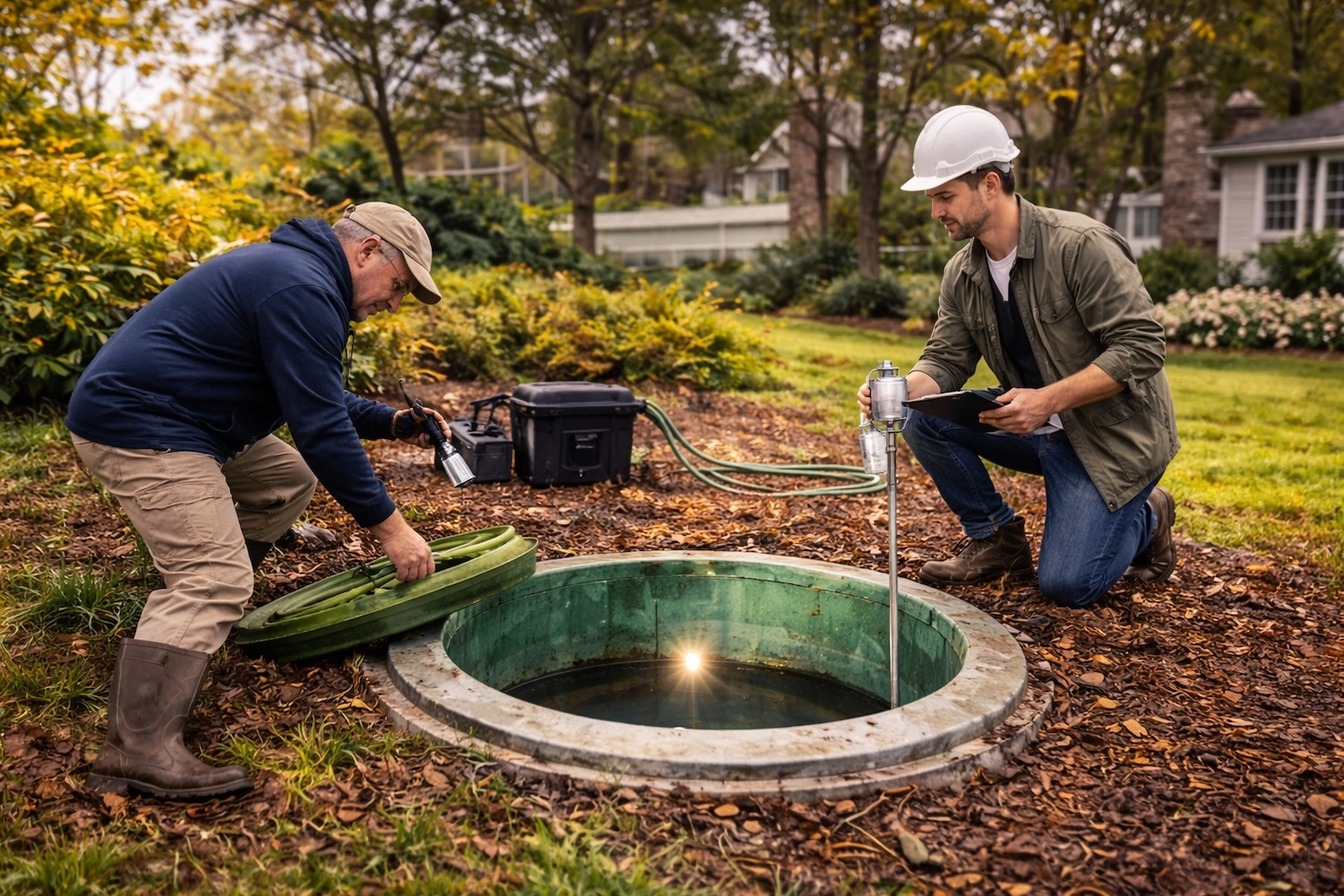
Septic & Well Inspections in New Hampshire: A Comprehensive Guide for Home Buyers
Purchasing a home with a private septic system and well in New Hampshire represents both independence and responsibility. With the median home price in New Hampshire hovering around $535,000, understanding the complexities of these essential systems is critical for protecting your investment. Whether you’re a first-time buyer or an experienced real estate investor, this comprehensive guide will equip you with the knowledge to navigate septic and well inspections with confidence, ask the right questions, and budget appropriately for long-term maintenance.
Why Septic and Well Systems Matter in New Hampshire
New Hampshire’s unique position as a state without income or sales tax makes homeownership particularly attractive, but most properties in the state rely on private septic systems and wells rather than municipal water and sewer. In fact, the majority of New Hampshire homes operate completely off the municipal grid. This decentralized approach offers distinct advantages—lower monthly utility costs, independence from government infrastructure, and the ability to live in rural or semi-rural settings. However, it also means you bear the full responsibility for system maintenance, repairs, and upgrades, which can be substantial expenses.
When municipal systems fail, repair costs are typically shared across a large customer base. With a private septic and well system, you may face costs ranging from several thousand to tens of thousands of dollars for major repairs or replacements. Understanding what you’re buying and its condition at the time of purchase is therefore essential to avoiding costly surprises after closing.
Understanding Septic Systems in Detail
A septic system is a self-contained wastewater treatment and disposal solution. At its core, the system consists of three main components: a septic tank, distribution pipes or a distribution box, and a drain field (also called a leach field or absorption field). Understanding how these components work together will help you evaluate system condition and anticipate future needs.
The Septic Tank: This is the first stop for all wastewater leaving your home. The tank, typically buried underground, separates solids and grease from liquid effluent. Heavy solids settle to the bottom as sludge, while lighter materials float to the surface as scum. The clarified liquid in the middle layer exits through an outlet pipe into the distribution system. Septic tanks are commonly constructed from concrete, plastic, or fiberglass. Concrete tanks, especially those installed decades ago, can develop cracks, corrosion, or baffle failures. Plastic and fiberglass tanks are more resistant to corrosion but can degrade under UV exposure (if installed above ground) or from ground stress. Tank capacity varies, typically ranging from 750 gallons for a small home to 2,000 gallons or more for larger households. A three-bedroom home usually requires a minimum 1,250-gallon tank.
The Distribution System: After exiting the septic tank, effluent flows through distribution pipes to the drain field. Some systems use a distribution box (or D-box) that evenly disperses the liquid across multiple drain lines, while modern systems may use pressure dosing, which pumps effluent in controlled doses to optimize distribution and improve system longevity. The choice of distribution method affects system performance and maintenance requirements.
The Drain Field: This is where the final treatment occurs. Effluent percolates through layers of soil, gravel, and sand, which act as a natural filter removing pathogens, nutrients, and other contaminants before the treated water reaches groundwater. The effectiveness of this process depends on soil type, porosity, depth to groundwater, and overall system design. Sandy or gravelly soils absorb water readily, while clay soils drain slowly and can lead to system failure. In New Hampshire’s variable terrain, soil composition varies dramatically by region and even by neighborhood, making site-specific evaluation essential.
System Types: The most common New Hampshire septic system is a conventional gravity-fed design with a subsurface drain field. However, alternative systems exist for challenging sites. A mound system elevates the drain field above the natural grade to increase separation from high groundwater or shallow bedrock, which is common in New England. A chamber system uses plastic chambers instead of crushed stone for infiltration, reducing excavation and environmental impact. An aerobic treatment unit (ATU) uses oxygen and mechanical action to break down waste more completely, producing cleaner effluent that can be dispersed to a smaller drain field. ATUs are more complex, require electricity and regular maintenance, and generate higher annual operating costs (typically $500–$1,200 annually for filter cleaning and servicing).
Older homes, particularly camps and cottages, may still have cesspools or dry wells—systems that simply leach raw wastewater into the ground. These outdated approaches are no longer permitted under New Hampshire Department of Environmental Services (NHDES) regulations and may require replacement before you purchase the property or shortly after.
What a Professional Septic Inspection Includes
A thorough septic inspection is far more detailed than a superficial check of the tank lid. Here’s what a certified septic inspector should evaluate:
- Document Review: The inspector begins by searching local health department files for septic design permits, as-built drawings, installation records, and maintenance history. This documentation reveals the original system design, capacity, and any past problems or repairs. Missing records don’t necessarily indicate a problem, but they limit your ability to assess system history.
- Tank Inspection: The inspector locates and uncovers both the inlet and outlet tank lids (most systems have two). They visually assess the tank exterior for cracks, corrosion, or settling. They then measure sludge depth using a measuring stick or probe, checking whether accumulated solids have reached levels indicating the tank needs pumping. They inspect inlet and outlet baffles (internal dividers) for corrosion, deterioration, or blockage. They look for signs of root intrusion, which can compromise tank integrity and disrupt treatment. They assess the tank material (concrete, plastic, fiberglass) and age to estimate remaining lifespan.
- Pipe and Fitting Inspection: The inspector checks accessible pipes and fittings for damage, corrosion, or improper slope. Pipes that are too flat cause solids to settle; pipes that are too steep allow liquids to separate from solids. They check for bellying or offset sections that trap solids.
- Distribution System Assessment: The inspector examines the distribution box (if present) for structural integrity and proper effluent distribution across drain lines. In pressure-dosed systems, they check pump operation, float switches, and alarms.
- Drain Field Evaluation: This is often the most critical part of the inspection. The inspector probes the drain field at multiple locations (typically 4–8 locations) to assess soil saturation, looking for ponding or soft, waterlogged soil that indicates system failure or poor percolation. They look for visual signs of surfacing sewage, odors, lush vegetation, or bare patches. They may run water tests inside the house (flushing toilets, running showers, doing laundry) to observe how the system handles peak loads and whether backflow occurs into the tank or distribution box.
- Advanced Diagnostics: Modern inspectors may use video camera inspection of pipes to identify cracks, roots, or blockages. Dye tests can confirm whether effluent is reaching the drain field or backing up into the system. In some cases, percolation testing or soil boring may be recommended to assess long-term system viability.
A comprehensive inspection takes two to four hours and typically costs $400–$600 in New Hampshire, though prices vary by region and system complexity. The report should clearly identify the system type, capacity, condition of each component, and recommendations for repairs or replacement.
Critical Red Flags in Septic Systems
During your inspection, watch for these warning signs that may indicate significant problems:
- Slow Drainage or Backups: If multiple drains in your home drain slowly, toilets gurgle when you run the washing machine, or showers back up after heavy use, the drain field may be failing. This suggests the system cannot absorb effluent at the rate it’s being produced.
- Odors or Surfacing Sewage: Foul sewage smells or pools of foul-smelling water above the drain field indicate effluent is not percolating into the soil. This is a definite system failure and poses public health risks.
- Frequent Pumping Requirements: If the previous owner pumped the tank annually or more frequently, the system may be undersized, failing, or severely abused (e.g., grease disposal, garbage disposal use, or excessive water consumption). Healthy systems typically require pumping every 3–5 years for a family of four.
- Lush Vegetation or Bare Patches in the Drain Field: Abnormally green, vigorous growth indicates nutrient-rich effluent surfacing. Conversely, bare patches or dead vegetation suggest the same problem.
- Unknown Age or History: Septic tanks typically have a functional lifespan of 25–40 years, depending on construction material and maintenance. Concrete tanks over 30 years old may show structural deterioration. Steel tanks are even shorter-lived, often lasting only 20–25 years before rusting through. If the tank age is unknown and the system is clearly aged, replacement may be imminent.
- Proximity to Wells or Water Bodies: State regulations require septic systems to be set back 75 feet from private wells and 100 feet from public wells. Systems closer than these distances risk contaminating drinking water. Check town records to confirm compliance.
- Permits and Legal Compliance: If the system was installed before permits were required or was modified without approval, it may not meet current standards. This can complicate future repairs and may trigger mandatory upgrades if the system fails.
New Hampshire Septic Regulations: Recent Changes and Waterfront Requirements
In September 2024, New Hampshire implemented significant changes to septic system regulations affecting waterfront property transfers. Understanding these new rules is critical if you’re buying or selling property near water bodies.
House Bill 1113 Waterfront Septic Inspection Law (Effective September 1, 2024): Governor Chris Sununu signed legislation that shifts septic inspection responsibility from sellers to buyers for waterfront properties. The law applies to any property where the septic system is within 250 feet of the reference line, defined as the high-water mark of lakes or ponds exceeding 10 acres, coastal waters, or fourth-order or higher rivers.
Under this new framework, buyers must arrange and fund septic inspections prior to property transfer. However, buyers may accept a septic inspection performed by the seller within 180 days of the sale. If the inspection reveals a failing system, the buyer has 180 days after closing to complete repairs or replacement. This timeline provides flexibility but places the burden of compliance on the new owner.
Non-Waterfront Properties: For properties not within the shoreland zone, septic inspections are not legally mandated in New Hampshire, though many lenders—particularly USDA Rural Development loans and New Hampshire Housing Finance Authority loans—require passing septic inspections as a condition of financing.
Emerging PFAS Disclosure Requirements: Beginning in 2025, New Hampshire home sellers must notify buyers of the possibility of water contamination from PFAS (per- and polyfluoroalkyl substances). This notification joins existing mandatory disclosures about radon, lead, and arsenic, reflecting growing concerns about emerging contaminants in New Hampshire’s groundwater.
Septic System Replacement Costs: What to Budget
Understanding realistic replacement costs is essential for budgeting and negotiating repairs. Costs in New Hampshire vary based on system type, soil conditions, accessibility, and local permitting requirements.
Complete System Replacement: A full septic system replacement in New Hampshire typically ranges from $9,000 to $26,000, with an average around $12,000 to $15,000 for a conventional system serving a three-bedroom home. More complex or alternative systems (mound systems, aerobic treatment units) can exceed $30,000.
Component-Only Repairs:
- Septic Tank Replacement: $3,000–$10,000, depending on tank size and material. Prices are lower than full system replacement because the drain field remains intact.
- Drain Field Repair: $1,000–$5,000 for localized repairs like pipe unclogging or partial remediation.
- Drain Field Replacement: $3,000–$15,000, depending on field size and soil conditions. Sandy, well-draining soil costs less; clay or ledgy terrain costs more due to excavation challenges.
- System Design and Permitting: $1,800–$2,400 for a licensed designer and $450–$2,000 for municipal permits and state approvals, depending on system complexity and locality.
Factors Affecting Cost: Soil conditions are the primary driver. Sandy loam soils are ideal and reduce costs. Clay soil or ledge (bedrock) significantly increases excavation costs. High water tables necessitate elevated or mound systems, adding $3,000–$5,000. Tight site constraints, large homes, or dense neighborhoods increase complexity and cost. Seasonal weather (frozen ground or excessive rainfall) can delay projects, increasing contractor labor costs.
Private Wells: Quality and Quantity Assessment
A private well supplies household water drawn from groundwater aquifers beneath your property. In New Hampshire, wells are typically drilled wells that penetrate 100 to 600 feet (or deeper) into bedrock aquifers. Older homes, particularly in rural areas, may have dug wells, which are shallow (10–30 feet) and lined with stone or brick. Dug wells are more susceptible to surface contamination and are increasingly phased out or upgraded to drilled wells.
When evaluating a property, schedule both a water quality test and a flow test to assess whether the well is safe and adequate for your household’s needs.
Water Quality Testing: Standards and Contaminants
New Hampshire Department of Environmental Services (NHDES) recommends that private well owners test their water every 3–5 years. Testing should be performed at a NHELAP-accredited laboratory to ensure accuracy and compliance with state standards.
Standard Analysis Testing should include:
- Bacteria (total coliform and E. coli)
- Nitrates and nitrites
- Arsenic
- Lead and copper
- Iron and manganese
- Uranium
- pH and hardness
- Chloride and sodium
Standard analysis typically costs $75–$150 and provides baseline assessment of common contaminants.
Additional Testing Recommendations:
- Radon Testing: Radon is a naturally occurring radioactive gas found in about 50% of New Hampshire bedrock wells. Elevated radon increases lung cancer risk. Testing costs $50–$100. If radon exceeds 4 picocuries per liter (pCi/L), the EPA recommends mitigation. The case study in the original article noted radon at 3,500 pCi/L, far exceeding safe levels, requiring aeration or activated carbon treatment ($800–$2,000 installed).
- Volatile Organic Compounds (VOCs): Common VOCs in New Hampshire include MtBE (methyl tert-butyl ether), benzene, and industrial solvents. Testing costs $150–$300. VOCs are typically associated with fuel contamination near underground storage tanks, landfills, or industrial sites.
- PFAS (Per- and Polyfluoroalkyl Substances): More than 3,000 drinking water wells in New Hampshire have tested at higher levels of PFAS than allowed under state law, representing 27% of all wells tested so far. PFAS contamination has been documented near industrial sites, landfills, and firefighting training areas. Testing costs $150–$300. If PFAS exceeds state limits, treatment via reverse osmosis or activated carbon systems ($2,000–$5,000 installed) is necessary. Starting in 2025, home sellers must notify buyers of potential PFAS contamination, even without testing.
- Uranium and Gross Alpha: These radiological contaminants are naturally occurring in New Hampshire’s granitic bedrock. Testing costs $100–$200. If uranium exceeds 30 micrograms per liter, treatment via ion exchange is recommended ($2,000–$3,500 installed).
Water Quality Test Costs: A comprehensive water quality analysis (standard testing plus radon, uranium, and PFAS) typically costs $400–$700. This investment is essential before purchase to avoid discovering contamination after closing when remediation costs are your responsibility alone.
Well Flow Rate and Yield: Adequacy Testing
Beyond safety, a well must produce sufficient water to meet household needs. A flow test measures the well’s sustainable yield in gallons per minute (GPM).
Minimum Yield Standards: The New Hampshire Water Well Board recommends a minimum of 600 gallons per day, which equates to approximately 0.42 GPM on an average continuous-use basis. However, most household inspectors and lenders expect a minimum yield of 2–3 GPM for single-family homes. Optimal yield is 4 GPM or higher, which provides comfortable water pressure, allows multiple simultaneous uses (shower and washing machine), and provides margin for seasonal fluctuations.
Performing a Flow Test: A certified well inspector runs water from the well continuously (usually a hose at maximum flow) and measures how many gallons are produced over a set time period (typically 30 minutes to 2 hours). The test accounts for drawdown (drop in water level) and recovery. If the well cannot sustain 2 GPM without excessive drawdown, it may be inadequate. Some wells recover quickly; others (especially in low-yield bedrock) recover slowly and may not be suitable for year-round full-time occupancy.
Low Yield Solutions: If a well yields less than 2 GPM, you have several options:
- Pressure Tank and Pump Upgrade: A larger pressure tank (100–200 gallons) can provide buffering, allowing water to accumulate during low-use periods for use during peak demand. Costs: $500–$1,500 installed.
- Hydrofracking: This process fractures bedrock around the well bore to increase water flow from previously untapped fissures. Success rates are moderate (40–60% yield improvement), and costs range from $1,500 to $3,500. Results are not guaranteed.
- New Well Drilling: Drilling an additional well can provide redundancy and increased capacity. Well drilling in New Hampshire costs $3,750–$15,300, depending on depth, soil conditions, and accessibility. New Hampshire regulations allow homeowners to drill wells on their own property, though hiring licensed drillers (required to file completion reports with the state) is advisable.
Well Drilling Costs and Regulations in 2025–2026
If a property lacks a well or requires a replacement, understanding drilling costs is essential for budgeting.
Drilling Cost Range: In New Hampshire, well drilling costs average $25–$65 per square foot of the job, translating to $3,750–$15,300 for a typical residential well. Regional variations are significant; remote or difficult-to-access properties incur higher costs due to equipment transportation and mobilization. Depth is a primary cost driver; shallow wells (100–150 feet) cost less than deep wells (400–600+ feet), which may be necessary in areas with low-yielding or contaminated shallow aquifers.
Residential Well Permit Costs: Municipal permits typically cost $200–$500 and often include specific conditions regarding location, construction standards, and water quality testing.
New Hampshire Drilling Regulations:
- Well drilling contractors must be licensed by the state. Homeowners may drill wells on their own property but are not required to do so.
- All drilled wells must be completed by filing a well completion report with NHDES. This record documents depth, water yield, static water level, and construction details.
- Wells must meet setback requirements: minimum 75 feet from septic tanks and drain fields, 100 feet from public water supply wells, and specific distances from property lines (varies by town).
- Local building departments may impose additional requirements regarding location, access, and construction specifications.
- The state does not mandate water quality testing for new wells, but lenders and municipalities often do as a condition of financing or occupancy.
Water Treatment Solutions for Contaminated Wells
If water quality testing reveals contaminants, treatment systems can address most issues. Your choice of treatment depends on which contaminants are present and to what degree.
Sediment and Carbon Filters: Cartridge filters remove particulates, improve taste, and reduce chlorine and some organic compounds. Cost: $200–$500 installed. Filters require replacement every 6–12 months ($50–$100 per replacement). Ideal for: general filtration, taste and odor improvement.
Water Softeners: Cation exchange resins remove calcium and magnesium (hardness), preventing scale buildup in pipes and appliances. Cost: $1,200–$2,500 installed. Softeners require salt refills (monthly cost: $20–$40). Brine discharge raises environmental concerns in sensitive watersheds. Ideal for: hardness reduction, extended appliance life.
Reverse Osmosis (RO) Systems: High-pressure filtration removes a broad spectrum of contaminants, including salts, nitrates, heavy metals, PFAS, and some organic compounds. Cost: $1,500–$3,500 installed. RO systems waste 2–4 gallons of water for every gallon produced, so they’re typically installed at the kitchen sink only. Membrane replacement costs $200–$400 every 2–3 years. Ideal for: comprehensive treatment; PFAS, nitrate, or heavy metal reduction.
Ultraviolet (UV) Sterilization: UV light kills bacteria, viruses, and some microorganisms but does not remove chemicals, metals, or other contaminants. Cost: $800–$1,500 installed. UV lamps must be changed annually ($100–$200). Requires water clarity to be effective. Ideal for: bacterial contamination; total coliform issues. Often paired with sediment filters.
Anion/Cation Exchange Units: Ion exchange resins selectively remove specific contaminants like arsenic, uranium, or nitrates. Cost: $1,000–$2,500 installed. Resins require periodic regeneration or replacement. Ideal for: arsenic or uranium reduction.
Aeration and Activated Carbon: Aeration bubbles air through water to volatilize radon and some VOCs. Activated carbon absorbs radon, some organic compounds, and pesticides. Cost: $1,000–$2,000 installed. Carbon requires replacement every 6–12 months ($100–$200). Ideal for: radon or VOC reduction.
In many cases, multiple systems are needed in series. For example, sediment filtration plus RO plus UV provides comprehensive treatment. Consult a water treatment specialist to design a system matched to your specific water chemistry.
Septic System Maintenance: Long-Term Planning
Protecting your investment requires consistent preventive maintenance. Costs are modest compared to emergency repairs or full replacement.
Regular Pumping: Have your tank pumped every 3–5 years, depending on household size (4+ people warrant every 3 years; smaller households can extend to 5 years). Pumping costs $300–$600 in New Hampshire. Document all pumping dates and sludge levels to track system performance. Request that the service provider record sludge depth; exceeding 35% tank capacity indicates the system is overloaded.
Drain Field Care: Avoid driving over or constructing on the drain field. Compact soil reduces permeability and shortens system life. Divert roof gutters and grading away from the drain field to prevent waterlogging. Avoid planting large trees near the field, as roots can penetrate pipes. Limit water use during periods of heavy rain or saturated soil conditions, allowing the field time to recover.
What NOT to Flush: Modern septic systems are designed for human waste and toilet paper only. Avoid flushing: antibacterial wipes (including “flushable” wipes), feminine hygiene products, cotton swabs, diaper, paper towels, cooking grease, food scraps, medications, and harsh chemicals. The disposal of non-biodegradable items is a leading cause of system failure. Many homeowners install a grease trap under the kitchen sink to capture fats and oils before they reach the tank.
Water Conservation: Systems are sized based on expected water use. Excessive water consumption (long showers, frequent laundry, large families) can overwhelm the system. Install low-flow fixtures and spread laundry loads throughout the week rather than multiple loads in one day. Fixing leaks promptly prevents unnecessary water loss and system stress.
Treatment Systems Maintenance: If the system includes aerobic treatment, maintain the blower according to manufacturer specifications. Change filters, service pumps, and clean aerator chambers as recommended. Neglect of these components can lead to premature system failure.
Well Maintenance and Water Quality Monitoring
Your well is a valuable asset requiring regular upkeep. Annual or biennial inspections and periodic water testing ensure continued safe, adequate supply.
Annual Inspections: Check for surface seepage, cracks in the well cap, or signs of contamination around the well head. Verify that the well is covered and protected. Have the pump and pressure tank serviced annually by a licensed well contractor ($150–$300 per visit).
Water Testing Schedule: Retest every 1–3 years, more frequently if results previously indicated concern. After any well repairs, test for bacteria. If you suspect contamination (odors, discoloration), test immediately.
Filter Replacement: Replace sediment filters every 6–12 months or as directed by the manufacturer. Track water usage and flow to detect premature clogging, which can indicate surface contamination entering the well.
System Documentation: Keep records of all testing, repairs, maintenance, and upgrades. These records are valuable if you later sell the property and help you track system performance over time.
Budgeting and Insurance Considerations
Successful homeownership with septic and well systems requires financial planning. Emergency repairs can be costly, so building reserves is prudent.
Reserve Fund Recommendations: Budget $150–$300 annually for routine septic maintenance (pumping and inspections). For wells, budget $100–$200 annually for testing and minor repairs. Additionally, establish a capital reserve of $5,000–$10,000 for major component replacements (pump, pressure tank, treatment systems). For longer-term planning, set aside $500–$1,000 annually toward eventual system replacement, which may be needed 20–40 years after installation.
Septic and Well Insurance: Some insurers offer limited septic or well coverage through home warranty plans. Coverage is typically narrow and may exclude pre-existing conditions, cosmetic repairs, or certain component failures. Premiums range from $300–$800 annually. Compare the cost of insurance to the realistic risk of major failure; if your system is young and well-maintained, self-insuring may be more economical. Read policy fine print carefully to understand coverage limits and exclusions.
Financing Options: Some municipalities offer low-interest loans or grants for septic system upgrades, particularly in environmentally sensitive areas. The NHDES maintains information on such programs. Private contractors often offer financing options (0–12% interest over 3–7 years) for major replacements, allowing you to spread costs.
Negotiating Repairs, Replacements, and Price Reductions
If your inspection reveals deficiencies, you have several negotiating strategies to protect your interests while keeping your offer competitive.
Request Seller Repairs: Ask the seller to correct identified problems before closing. Major issues (tank replacement, drain field remediation) are costly and time-consuming, so sellers often resist. However, lenders may require certain repairs as a condition of financing, forcing the seller’s hand.
Negotiate Price Reduction: Request a reduction in the purchase price equal to the estimated cost of repairs. This shifts responsibility to you but gives you control over timing, contractor selection, and work scope. In a seller’s market, buyers often receive modest reductions rather than full repair costs.
Escrow Holdback: Request that a portion of the purchase price (typically 1.5–2 times the estimated repair cost) be held in escrow at closing. After closing, you have a defined period (typically 90 days to 1 year) to complete repairs and provide receipts. If repairs cost less than estimated, you receive the difference. If costs exceed the escrow amount, you pay the overage.
Contingencies and Timelines: Include appropriate inspection contingencies in your purchase agreement. Specify deadlines for reporting deficiencies (typically 7–14 days after inspection) and for the seller’s response (typically 3–7 days). Clear timelines prevent disputes and keep the transaction on track. For major issues, negotiate extended timelines to allow the seller to arrange contractors and obtain permits.
Treatment System Installation: Rather than negotiating major structural repairs, ask the seller to install treatment systems before closing. For example, if arsenic or radon testing shows elevated levels, request installation of an arsenic filter ($1,500–$2,500) or radon mitigation system ($1,000–$2,000) before you take possession. These upgrades improve salability, reduce your initial costs, and provide peace of mind.
Step-by-Step Inspection and Due Diligence Plan
Follow this systematic approach to protect yourself during the buying process:
- Research Local Requirements: Contact the town health department and building department to understand local design standards, setback requirements, and any system-specific regulations. Ask whether septic inspections are required by local ordinance or by lenders. Inquire about recent water quality issues or contamination hotspots. Request records of the subject property’s septic and well history if available.
- Hire Qualified Professionals: Engage a certified septic inspector accredited by the New Hampshire Septic System Association or similar organization. Hire a laboratory accredited by NHELAP for water testing. Ask inspectors about scope of testing, turnaround times for results, and willingness to explain findings and recommendations.
- Request Documents: Ask the seller to provide septic design permits, as-built plans (showing actual installed system versus design), pumping records for the past 5–10 years, well drilling logs, water quality test results, and receipts for any repairs or upgrades. Photograph or scan all documents for your records.
- Schedule Inspections During Favorable Conditions: When possible, schedule septic inspections during or shortly after heavy rain or spring snowmelt, when groundwater levels are high. High water tables make drain field saturation more obvious. Schedule well flow tests during dry season conditions to assess worst-case yield.
- Review Results Thoroughly: Once results arrive, review them with your inspector, your agent, and (if possible) a certified HVAC or plumbing contractor familiar with rural systems. Understand which findings are minor and correctable versus which signal major investment. Some deficiencies are cosmetic or easily remedied; others suggest systemic failure.
- Plan for Contingencies: Include appropriate contingencies in your purchase contract, allowing time to complete inspections and negotiate outcomes. Don’t waive inspection contingencies for septic and well systems, even in competitive markets. These systems are too important and expensive to skip due diligence.
- Document Everything: Keep copies of all inspection reports, test results, correspondence, and repair estimates. These records are valuable for future reference, insurance claims, or resale documentation.
Regional Variations in New Hampshire Septic and Well Conditions
New Hampshire’s diverse geology creates distinct septic and well challenges across regions. Understanding your area’s characteristics helps you anticipate issues and budget appropriately.
Coastal and Southeastern Areas (Rockingham County): Higher water tables and sandy soils are common. Sandy soils offer excellent drainage for septic systems but increase radon and contaminant infiltration risk for wells. High water tables necessitate elevated or mound systems, increasing costs by $3,000–$5,000. Well drilling is shallower (150–300 feet typical) but more prone to saltwater intrusion near the coast and PFAS contamination near industrial sites.
Central New Hampshire (Merrimack County): Mixed soil types (sandy, clay, silt) require site-specific assessment. The Saint-Gobain manufacturing site in Merrimack has contaminated a large area with PFAS, affecting numerous private wells. PFAS testing is critical when purchasing in this region. Septic system design is highly variable based on localized soil conditions.
Mountainous Regions (Belknap, Carroll, Coos Counties): Shallow bedrock and granite ledge are common, significantly increasing drilling costs. Well depths often exceed 400 feet, pushing costs toward the upper range. Septic system design is constrained by limited soil depth; mound or sand filter systems are common, increasing initial and maintenance costs. Seasonal variation is pronounced; spring snowmelt raises water tables dramatically, and winter freezing can affect system function.
Agricultural Areas (Strafford County, Sullivan County): Nitrate contamination from fertilizer and manure spreading is a concern. Wells in agricultural regions should be tested annually for nitrates. Septic systems may be inadequately maintained on farm properties with multiple buildings, requiring careful evaluation of system capacity relative to total household and farm activity.
Advanced Septic Technology: Alternatives for Challenging Sites
When conventional gravity-fed systems aren’t feasible, alternative technologies offer solutions for problematic sites.
Mound Systems: A mound system elevates the drain field above grade on a constructed mound of sand and gravel. This is necessary in areas with high groundwater, shallow bedrock, or clay soils with poor permeability. Mounds are particularly common in New Hampshire’s lakes regions and mountain areas. Construction cost is 20–30% higher than conventional systems ($12,000–$18,000 installed). Mounds are visually prominent and require ongoing maintenance, but they function reliably in challenging conditions.
Chamber Systems: Plastic chambers replace the traditional crushed-stone-and-perforated-pipe design. Chambers reduce excavation volume and environmental impact while maintaining treatment effectiveness. Cost is comparable to conventional systems ($10,000–$14,000) but offers long-term durability advantages. Chambers are particularly useful in environmentally sensitive areas where minimizing disturbance is important.
Aerobic Treatment Units (ATUs): These systems use mechanical aeration (pumps and diffusers) and natural bacteria to break down waste more thoroughly than conventional systems, producing cleaner, more consistent effluent. Cleaner effluent allows use of smaller drain fields, beneficial in tight sites. Cost is higher ($14,000–$22,000 installed), and annual maintenance contracts ($500–$1,200 annually) are essential. ATUs are ideal for environmentally sensitive sites or where drain field space is severely limited.
Sand Filters and Constructed Wetlands: Sand filters provide additional treatment for sensitive applications. Constructed wetlands (artificially designed wetlands using plants and soil to treat wastewater) offer treatment and aesthetic benefits. Both require adequate land area and are less common in New Hampshire due to space constraints, but they’re increasingly popular in new development projects where environmental standards are stringent.
Nitrogen-Reducing Systems: Some advanced systems include pretreatment stages or special drain field configurations designed to reduce nitrate leaching. These are most relevant in areas with shallow groundwater or proximity to public water supplies vulnerable to nitrate contamination. Costs are 15–25% higher than conventional systems but may be required by town regulations in sensitive areas.
System Design, Permitting, and Installation Process
If you need to replace a septic system, understanding the design and installation process helps you plan timelines and budget realistically.
Site Assessment: A licensed septic system designer evaluates soil composition (percolation testing), depth to groundwater and bedrock, topography, and proximity to wells, property lines, and water bodies. This assessment ($1,800–$2,400) takes 1–2 weeks and informs system design. Percolation tests involve digging test pits, saturating soil, and measuring water absorption rates.
Design Development: Based on the site assessment, the designer creates a system plan specifying tank size, drain field configuration, setback distances, and construction details. The design must comply with NHDES standards and local health department regulations. Design revision typically costs $200–$400 per iteration if local officials request changes.
Permitting and Approval: The design is submitted to the town health department for review and approval. The approval process typically takes 2–4 weeks but can take longer if requested modifications require design revision. Local approval is required before installation begins. State approval (from NHDES) is required for systems in shoreland zones or environmentally sensitive areas, adding 2–6 weeks to the timeline.
Installation: Once permitted, installation can commence. Excavation of the tank bed and drain field typically takes 2–5 days, depending on site size and soil conditions. Tank installation, pipe connections, and drain field construction take an additional 3–7 days. Total installation time is typically 1–2 weeks, but weather delays (rain, frozen ground) can extend this.
Inspection and Final Approval: Once installed, the system is inspected by the local health officer to verify compliance with approved plans. The inspector observes construction details, checks setback measurements, and may observe a water test (running water through the system to verify proper drainage). Final approval permits you to use the system. The entire process from assessment to final approval typically takes 6–12 weeks.
Case Study: Evaluating a Rural Property with System Challenges
Consider a buyer evaluating a 1970s farmhouse on two acres with a known septic system and private well. The listing notes the system is original to the 1974 construction and the well was drilled in 1982. Initial appeal is high: the property offers rural character, land, and a lower price point ($350,000 versus $535,000 median for the state). However, system age presents risk.
Inspection Findings:
- Septic System: The concrete tank (1,250 gallons) shows hairline cracks and corrosion of the outlet baffle. Pumping records show the system was pumped four years ago at 40% sludge fill; no prior records exist. The drain field probing reveals soft, saturated soil in two of four probe locations, indicating marginal percolation. The inspector rates the system as “marginal” with likely 3–7 years of remaining life. Replacement cost estimate: $12,000–$16,000.
- Well: Water quality testing shows nitrate at 12 mg/L (state limit is 10 mg/L, indicating contamination from agricultural runoff or nearby septic system), arsenic at 15 mcg/L (state limit is 10 mcg/L), and radon at 2,800 pCi/L (EPA action level is 4 pCi/L). Well yield is 3 GPM with moderate drawdown, acceptable but not robust. Recommended treatment: nitrate ion exchange ($2,000), arsenic removal system ($1,500), and radon mitigation ($1,500). Total water treatment cost: $5,000.
Negotiation Strategy: Armed with inspection data, the buyer negotiates:
- A $12,000 price reduction, covering estimated septic replacement cost
- Seller provision of funds ($5,000) in escrow for water treatment system installation within 120 days of closing
- Request for septic system pumping and baffle repair (estimated $800) before closing, extending system life and demonstrating goodwill
The seller accepts the price reduction and escrow arrangement, viewing it as more palatable than conducting expensive repairs immediately before sale. The buyer closes on the property, plans septic replacement within 18 months (using the price reduction savings), and installs water treatment immediately after closing using escrow funds. Within two years, the system upgrades are complete, and the property is fully modernized.
Outcome: The buyer acquires a property with land and character at a reasonable price, negotiating repairs to protect the investment and ensuring clean water from day one. The transparent approach to system condition allows both parties to close successfully without surprises.
Resources and Support for New Hampshire Homeowners
Numerous resources are available to help you navigate septic and well ownership:
- New Hampshire Department of Environmental Services (NHDES): www.des.nh.gov offers publications, guidelines, and technical information on well and septic design, operation, and maintenance. The NHDES Subsurface Systems Bureau can be reached at 603-271-3501.
- NHDES Drinking Water Information Tool: The “Be Well Informed” online tool helps interpret private well water test results against state and federal standards.
- University of New Hampshire Cooperative Extension: Offers educational workshops, publications, and guidance on well maintenance, water quality, and septic system care. Extension offices are located in each county.
- Granite State Onsite Wastewater Association: A professional organization of septic designers, installers, and inspectors. Members maintain high professional standards and can be relied upon for expert guidance.
- New Hampshire Real Estate Professionals: Agents experienced with rural properties can connect you with trusted contractors, laboratories, and inspectors while providing guidance on system evaluation and negotiation.
- County and Municipal Health Departments: Your town health officer is a valuable resource for local regulations, setback requirements, and historical records. Building departments can provide access to septic plans and permits on file.
Conclusion: Own Off-Grid with Confidence
Purchasing a home with a private septic system and well doesn’t have to be daunting. With proper due diligence, professional inspections, and strategic negotiation, you can identify risks, budget for repairs, and plan for long-term maintenance. The independence offered by off-grid living—freedom from municipal rate increases, lower monthly utilities, and rural character—is accessible when you approach the investment systematically.
Key takeaways for your purchase:
- Always hire qualified inspectors and accredited laboratories. Don’t cut corners on evaluation.
- Test for radon, arsenic, uranium, PFAS, and other contaminants specific to your region. Water quality results guide treatment decisions and inform your purchase decision.
- Understand New Hampshire’s evolving regulations, particularly the 2024 waterfront septic inspection law and the 2025 PFAS disclosure requirement.
- Negotiate systematically. Price reductions, escrow holdbacks, or seller-provided repairs protect your interests without necessarily derailing the transaction.
- Budget for long-term maintenance and eventual replacement. Reserve funds and insurance options are available to spread costs.
- Leverage professional resources. Your agent, inspectors, and local officials are partners in the due diligence process.
Ready to find a well-maintained septic and well system that fits your lifestyle and budget? Contact Bean Group today for personalized guidance on rural and off-grid properties across New Hampshire. Our team specializes in helping buyers navigate the complexities of system evaluation, negotiation, and long-term planning. Whether you’re seeking a modest cottage with basic systems or a fully upgraded modern property, we have the expertise and connections to guide you to a smart purchase. Call us or visit our website to connect with an agent who understands New Hampshire’s unique real estate landscape and will advocate for your interests every step of the way.