


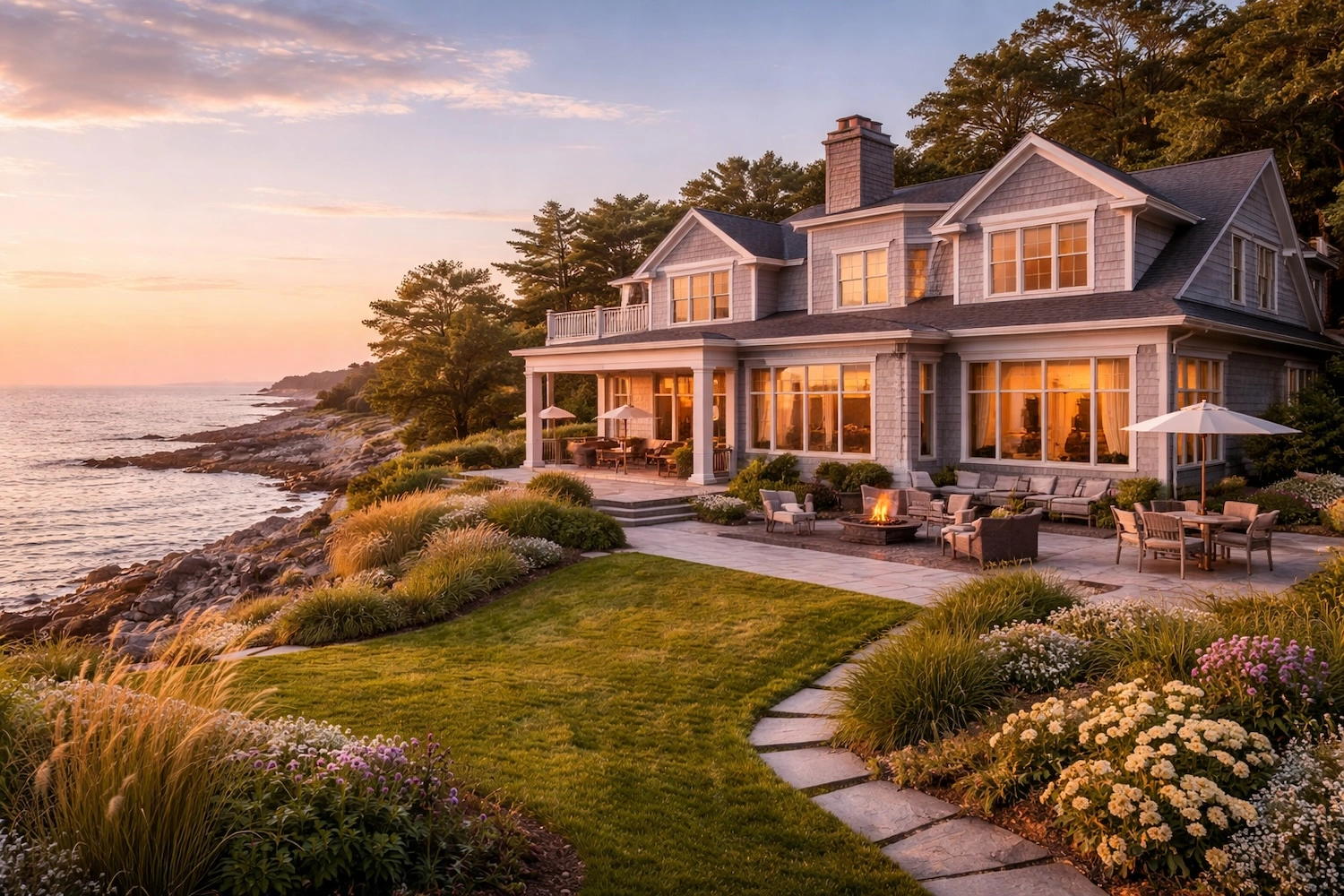
Seacoast NH Luxury Homes: Defining the Upper Tier in 2026
The Seacoast region of New Hampshire represents one of the Northeast's most compelling luxury real estate markets. Stretching from Rye and New Castle to Portsmouth and North Hampton, this coastal corridor has captured the attention of affluent buyers seeking the perfect blend of maritime heritage, ocean access, and exclusive living. Over the past decade, Seacoast properties have attracted executives, entrepreneurs, retirees, and multi-generational families from Boston, New York, and beyond. Yet the luxury market has evolved significantly. In 2026, defining what constitutes a luxury home on the New Hampshire coast extends far beyond square footage or price alone. The convergence of location prestige, architectural excellence, lifestyle amenities, and environmental consciousness now shapes the upper tier of the market.
The Current Seacoast Luxury Market: By the Numbers
New Hampshire's overall median home price reached $535,000 in 2025, reflecting stable appreciation and steady demand. However, the Seacoast region commands a substantial premium over the state average. According to recent market data, the median single-family home price in the Seacoast region reached $689,000, a 7.7 percent increase from the previous year. In premium Seacoast towns, luxury median home values have surged to $1.7 million, trending up 38.1 percent year-over-year—far outpacing broader state growth rates.
Portsmouth, the region's largest city, has seen particularly strong activity. The December 2025 median home price in Portsmouth reached $875,000, up 4.2 percent compared to the previous year. Single-family homes and condos combined achieved a June 2025 median of $874,000, representing a 7.4 percent annual increase. For those seeking ultra-premium waterfront properties, oceanfront homes in Rye and New Castle frequently exceed $4 million, with truly exceptional estates commanding $8 million or more. Inland luxury homes in the Seacoast range from $1.5 million to $3 million depending on acreage, views, and finishes.
Perhaps most notably, Greenland—an affluent Seacoast enclave—experienced extraordinary appreciation, with median sales prices skyrocketing to $2.47 million in November 2025, a 235.3 percent increase year-over-year, demonstrating fierce buyer competition for exceptional properties. These figures underscore the Seacoast's position as New Hampshire's most robust luxury market.
Defining Luxury: Beyond Price
In real estate, the term “luxury” is inherently relative. In New Hampshire, properties near or above the $2 million threshold typically enter the upper tier, though location, condition, and amenities can significantly shift that benchmark in either direction. A $1.5 million oceanfront cottage in Rye Beach might appear modest alongside $5 million waterfront estates nearby, while a pristine $2 million property with exceptional architectural pedigree could be the finest home for miles.
To truly understand what defines luxury in the Seacoast market today, look beyond the sales price to several key factors:
- Waterfront Access and Views: Direct oceanfront properties, deeded beach rights, or unobstructed water views remain the ultimate markers of prestige. Proximity to preserved land, private golf courses, or exclusive club memberships further enhance desirability and long-term value.
- Architectural Excellence and Provenance: Custom construction featuring high-end finishes, architectural pedigree, and timeless design distinguish luxury homes from standard builds. This includes handcrafted millwork, designer lighting fixtures, imported stone, and construction methods designed to withstand coastal conditions. Homes designed by renowned architects or with compelling restoration stories command premiums.
- Privacy, Security, and Land: Secluded parcels with long private drives, gated entries, and substantial acreage appeal to buyers prioritizing privacy and security. The scarcity of such properties on the Seacoast significantly enhances their value.
- Modern Luxury Amenities: Smart-home integration, chef’s kitchens with professional-grade appliances, wine cellars, spa-like primary suites, and sophisticated outdoor living spaces reflect contemporary lifestyle expectations. Wellness features, including saunas, cold plunges, and advanced air purification systems, have emerged as essential luxury markers in 2026.
- Environmental Resilience: In the coastal context, homes designed and elevated to resist erosion, flooding, and storm surge demonstrate long-term investment wisdom. Breakaway foundations, hurricane-rated windows, and resilient materials are now standard expectations rather than premium upgrades.
Seacoast Luxury Enclaves: Geographic Tiers
While every town on the Seacoast offers some level of high-end living, several distinct enclaves have established themselves as the region's most exclusive addresses.
Rye and Rye Beach: The Coastal Standard
Rye boasts New Hampshire's longest coastline, with Ocean Boulevard (Route 1A) lined by grand shingle-style homes and contemporary beachfront estates. Rye Beach and Jenness Beach neighborhoods command the highest per-square-foot prices thanks to long sandy stretches, Atlantic exposure, and protective dune systems. Inland enclaves like Foyes Corner offer wooded privacy with convenient beach access and offer an alternative for buyers seeking slightly more land and seclusion while maintaining coastal proximity. Properties in Rye typically range from $2 million to $6 million depending on waterfront status and lot size.
New Castle: New Hampshire's Most Exclusive Town
Situated on an island between the Atlantic and Great Bay, New Castle is the state's smallest town by land area and arguably its most exclusive address. Historic mansions near the iconic Wentworth by the Sea Hotel mingle with contemporary waterfront retreats featuring deep-water docks and yacht access. Channel views, walkability to the Portsmouth Yacht Club, and the town's limited supply of available properties create sustained demand and price appreciation. New Castle median prices have consistently ranked among the state's highest, with many properties priced between $2 million and $5 million.
North Hampton and Little Boar's Head: Bluff-Top Estates
The Little Boar’s Head district of North Hampton features oceanfront estates perched dramatically on bluffs overlooking the Atlantic. Architectural styles range from turn-of-the-century cottages with historic character to sleek, modernist homes maximizing ocean views. Residents enjoy exclusive rights to private beaches and the quiet charm of tree-lined roads. In nearby North Hampton village, luxury buyers find equestrian properties, country estates, and multi-acre retreats within minutes of the ocean. This area appeals to buyers seeking more land while maintaining coastal prestige.
Portsmouth's South End and Historic Districts
Portsmouth, the region's cultural and culinary hub, offers an urban luxury alternative. The South End and Wentworth-Coolidge neighborhoods feature historic mansions, many with waterfront access to tidal inlets and harbor views. Although lots tend to be smaller than in Rye or North Hampton, proximity to downtown Portsmouth's renowned dining, galleries, and entertainment venues adds significant intangible value. The city has experienced robust appreciation in recent years, with buyers trading acreage for walkability, heritage architecture, and cultural access. Downtown penthouse units and exclusive townhomes near the Portsmouth Yacht Club appeal to buyers seeking turnkey luxury with minimal maintenance.
Current Luxury Home Design and Amenities: 2026 Standards
Luxury home expectations have transformed markedly as buyer preferences evolve. Today's discerning purchasers demand homes that seamlessly balance form and function while reflecting contemporary lifestyle priorities.
Architectural and Interior Design
Open floor plans with dramatic ceiling heights remain popular, especially those featuring walls of glass oriented toward water views. The indoor-outdoor continuum is now essential, with retractable glass façades, floating decks, and seamless transitions extending living spaces onto terraces and decks. Biophilic design—the incorporation of natural elements and views—is integral to contemporary luxury homes. Natural light, strategic views, and connections to surrounding landscape distinguish exceptional properties.
Primary suites have evolved into private retreats, often including sitting areas, fireplace lounges, private terraces, and spa-quality bathrooms with steam showers, heated floors, and soaking tubs. Guest quarters or in-law suites have become standard as multigenerational living increases at the high end of the market.
Kitchen and Culinary Spaces
Chef’s kitchens now rival those of high-end restaurants, featuring professional-grade appliances, custom cabinetry, oversized islands, wine refrigeration, and spacious pantries with specialty storage. Integrated coffee bars, butler’s pantries, and temperature-controlled beverage centers reflect the premium entertaining lifestyle. Design trends toward “invisible” kitchens—where cabinetry and appliances blend seamlessly into the home’s design aesthetic—are gaining traction among the most design-forward buyers.
Technology and Smart Home Systems
Smart-home integration has transitioned from luxury upgrade to market expectation. This includes sophisticated control systems for lighting, climate, security, and entertainment accessible via smartphone and voice command. Advanced energy management systems, EV charging infrastructure, and renewable energy options (solar arrays designed to maintain aesthetic appeal) reflect growing sustainability consciousness among luxury buyers. Security systems with integrated surveillance, intercom systems, and controlled access points appeal to privacy-focused purchasers.
Wellness and Recreation Amenities
Wellness amenities have emerged as defining luxury features in 2026. Dedicated spa spaces featuring sauna and cold plunge combinations were once reserved for large suburban estates but now appear in coastal luxury homes. Circadian lighting systems, advanced air and water purification, and dedicated restoration zones with chromotherapy saunas and salt inhalation rooms reflect health-conscious luxury buyers. Heated swimming pools with infinity edges overlooking the ocean, hot tubs, and fire pits are now standard for oceanfront properties. Fitness studios, yoga rooms, and recovery spaces accommodate wellness-focused lifestyles.
Outdoor Living and Landscaping
Outdoor spaces function as extensions of the home rather than afterthoughts. Infinity pools, hot tubs, fire pits, and outdoor kitchens with built-in grills, refrigeration, and entertainment areas support year-round enjoyment even in a New England climate. Native plantings and low-maintenance landscaping keep visual focus on the ocean and surrounding natural environment. Boat storage, multiple garage bays (often climate-controlled), and dedicated workspace for remote work reflect contemporary lifestyle requirements.
Environmental Regulations, Flood Risk, and Coastal Resilience
Building or renovating on the Seacoast requires navigating a complex regulatory landscape designed to protect coastal ecosystems and mitigate climate-related risks. Sophisticated buyers understand these considerations as central to long-term property value and insurability.
Regulatory Framework
The New Hampshire Coastal Zone Management Act, state wetlands protections, and local ordinances govern setbacks, lot coverage, stormwater management, and vegetation removal. The Army Corps of Engineers regulates work in and near tidal areas and wetlands. Town-specific regulations in Rye, New Castle, North Hampton, and Portsmouth add additional layers of review. Any significant renovation or new construction requires environmental impact assessments and often triggers public hearings. Buyers should plan for engineering studies evaluating erosion risk, flood zones, and coastal resiliency before committing to purchase.
Elevation, Flood Zones, and Coastal Resilience
Climate-aware buyers increasingly examine flood-risk maps and historical storm surge data. Homes elevated above base flood elevation typically qualify for lower flood insurance premiums. Breakaway foundations, designed to collapse in severe storms and reduce structural damage, have become standard for first-floor construction in flood-prone areas. Materials resistant to salt air and wind, including fiber-cement siding, corrosion-resistant metals, and treated wood, ensure longevity and reduce maintenance costs. Proper drainage, permeable paving, and rain gardens mitigate stormwater impacts and demonstrate environmental stewardship.
Insurance and Long-Term Costs
Waterfront properties may require flood coverage through the National Flood Insurance Program (NFIP) or private flood insurers, with premiums varying based on elevation, distance from water, and historical flood data. Standard homeowners insurance for luxury properties must provide adequate replacement cost coverage for high-end materials and custom construction. Many coastal luxury homes carry replacement cost estimates exceeding $5 million, requiring careful coordination of flood, homeowners, and liability coverage. Engaging an insurance broker experienced in coastal properties is essential to confirm adequate coverage and explore cost-management strategies.
The 2025–2026 Seacoast Luxury Market Outlook
The Seacoast luxury market has demonstrated resilience and sustained appreciation despite broader market fluctuations. Limited inventory, strong demand from out-of-state and international buyers, and continued migration to coastal communities support price stability and gradual appreciation.
Market Dynamics and Pricing Trends
In 2025, oceanfront homes in Rye and New Castle frequently exceeded $4 million, with exceptional estates commanding $8 million or higher. Inventory levels increased 19.6 percent from August 2024 to August 2025, rising from 2,705 to 3,235 homes statewide, providing somewhat greater selection than prior years. However, luxury waterfront inventory remains exceptionally tight, ensuring seller advantages in negotiation and pricing. Well-priced properties sell quickly, often with multiple offers. The forecasted appreciation rate for New Hampshire in 2026 is 2 to 4 percent—more modest than the boom years of 2020–2022 but consistent with steady, sustainable appreciation.
Financing and Buyer Profiles
Cash purchases remain common in the luxury segment, particularly for properties exceeding $3 million. Jumbo loans (mortgages exceeding $766,550) and portfolio financing solutions are widely available from major lenders and private mortgage banks. Interest rates have stabilized, providing predictability for financed buyers compared to the dramatic fluctuations of the early 2020s. Federal Reserve data indicate that high-income households view real estate primarily as long-term asset investments rather than rate-sensitive necessities, suggesting luxury buyers remain less sensitive to interest rate changes than typical purchasers.
New luxury buyer demographics are shifting. Inherited wealth is fueling market activity, with an estimated $6 trillion passed globally in 2025, creating a new wave of younger, well-capitalized buyers. Nearly one in five luxury purchases in the U.S. now follow multigenerational living patterns, with extended families seeking larger homes to accommodate multiple generations. International buyer activity is accelerating, with foreign buyer participation jumping 44 percent year-over-year, particularly from Canada, the United Kingdom, and Western Europe seeking U.S. coastal properties.
Seller Preparation and Market Positioning
Sellers continue to invest substantially in pre-sale updates and renovations, understanding that move-in-ready homes generate multiple offers and command premium prices. Luxury buyers increasingly expect turnkey conditions, with dated systems, worn finishes, and deferred maintenance significantly limiting buyer interest regardless of architectural merit or setting. Strategic upgrades to kitchens, bathrooms, lighting, and technology systems provide the strongest return on investment.
Condominium and Penthouse Alternatives
Luxury condominiums and penthouse units offer an alternative for buyers seeking waterfront sophistication with minimal maintenance responsibility. Downtown Portsmouth penthouses, exclusive townhome developments near the Portsmouth Yacht Club, and limited-membership resort-style communities appeal to buyers seeking turnkey luxury without single-family home ownership responsibilities. These alternatives often feature concierge services, shared amenities, and professionally managed common areas.
Case Study: The Evolution of Coastal Luxury—A Rye Beach Oceanfront Estate
A recent sale exemplifies contemporary definitions of Seacoast luxury in practice. An 8,000-square-foot shingle-style manor in Rye Beach, originally built in 1890, underwent an extensive multi-year renovation blending historic preservation with modern luxury. The meticulous project preserved original timber beams, period fireplaces, and architectural details central to the home's character while introducing a state-of-the-art kitchen with two islands and custom cabinetry, radiant heating throughout, energy-efficient mechanical systems, and hurricane-rated windows meeting contemporary building codes. The expanded primary suite features a spa bathroom with heated limestone floors, soaking tub, and steam shower. Outdoor improvements included terraces, landscaped gardens, and a heated pool overlooking 200 feet of private sandy beach. The home sold for $6.7 million in under two weeks, a remarkable achievement demonstrating that discerning buyers will pay substantial premiums for turnkey properties combining architectural significance, exceptional setting, flawless execution, and modern amenities.
The Role of Expert Guidance in Luxury Transactions
Pursuing a high-end purchase or sale on the Seacoast is not a DIY venture. Each element of the transaction requires specialized expertise and deep market knowledge.
Real Estate Agents and Market Specialists
Experienced real estate agents specializing in luxury waterfront transactions bring invaluable market intelligence. They maintain networks providing access to off-market opportunities before public listing, advise on optimal pricing strategies informed by comparable sales analysis, coordinate inspections and professional consultations, and skillfully navigate often complex negotiations. Agents serving the luxury segment understand the tax, financial, and lifestyle considerations unique to high-net-worth clients and maintain relationships with lenders, attorneys, and other specialists essential to successful transactions.
Architectural, Engineering, and Environmental Professionals
Architects and builders with specialized coastal expertise ensure renovation and new construction plans comply with regulatory requirements and suit the site's specific conditions. Structural engineers evaluate foundation stability, erosion risk, and storm surge resilience. Environmental consultants assess wetlands, water quality, and ecological impacts. These professionals help buyers understand the true cost and complexity of coastal property ownership while avoiding costly regulatory violations or environmental liabilities.
Legal and Financial Expertise
Waterfront real estate attorneys specializing in New Hampshire coastal law help structure purchases, navigate title issues unique to coastal properties, review environmental permits and restrictions, and manage coastal-specific compliance matters. Financial advisors and tax professionals coordinate property acquisition with broader wealth strategies, manage 1031 exchanges for investors, and optimize the tax implications of property ownership and eventual disposition.
The Lifestyle Element: Living on the New Hampshire Seacoast
Perhaps the most compelling aspect of Seacoast luxury living transcends physical amenities and financial metrics. Property ownership along the New Hampshire coast connects residents to rhythms of the ocean, the charm of historic maritime towns, and the convenience of proximity to Boston and major airports.
Rye offers a quieter, more residential coastal experience with excellent beaches and a strong local community. New Castle provides an exclusive, island-oriented enclave with deep maritime heritage and yacht culture. North Hampton combines oceanfront prestige with country-estate privacy. Portsmouth offers urban sophistication, cultural attractions, and waterfront dining without the isolation of outlying communities. Each enclave attracts different buyer personalities and lifestyle priorities, yet all share access to world-class maritime recreation, excellent schools, cultural institutions, and the natural beauty that defines New Hampshire's Seacoast.
Wealth Preservation and Legacy Considerations
For many luxury Seacoast buyers, the property represents more than a residence. It serves as a family gathering place spanning generations, a legacy asset building family identity and connection, and a tangible wealth repository maintaining value amid financial market volatility. These emotional and strategic considerations often matter more to purchasing decisions than square footage or even price appreciation rates.
Conclusion: Luxury Redefined for 2026 and Beyond
Luxury homes on New Hampshire's Seacoast are about far more than square footage, price points, or amenities checklists. They represent a lifestyle intertwined with maritime heritage, natural beauty, architectural excellence, and modern comforts. In 2026, discerning buyers continue to seek this distinctive blend, though their definitions of luxury have evolved to prioritize wellness, sustainability, privacy, and multigenerational functionality alongside traditional markers of prestige.
Whether you’re contemplating a contemporary glass retreat in Rye, a restored historic manor in New Castle, a bluff-top estate in North Hampton, or a sophisticated penthouse overlooking Portsmouth Harbor, understanding what truly defines the upper tier positions you for success. The Seacoast luxury market rewards informed, intentional decision-making guided by specialists who understand the nuances of coastal real estate, regulatory complexity, and the intangible factors that transform a house into a lasting legacy.
The Bean Group, brokered by eXp Realty, brings decades of combined expertise in New Hampshire Seacoast luxury real estate. Our team specializes in waterfront properties, understands the regulatory landscape governing coastal construction and renovation, and maintains extensive networks providing access to exceptional opportunities. Whether you’re seeking your dream coastal home, preparing to sell a cherished property, or exploring investment opportunities on the Seacoast, we invite you to contact our team. Let us guide you through the process of acquiring or divesting a luxury Seacoast property, from identifying your ideal enclave and property type to navigating the intricacies and opportunities of New Hampshire coastal ownership.