


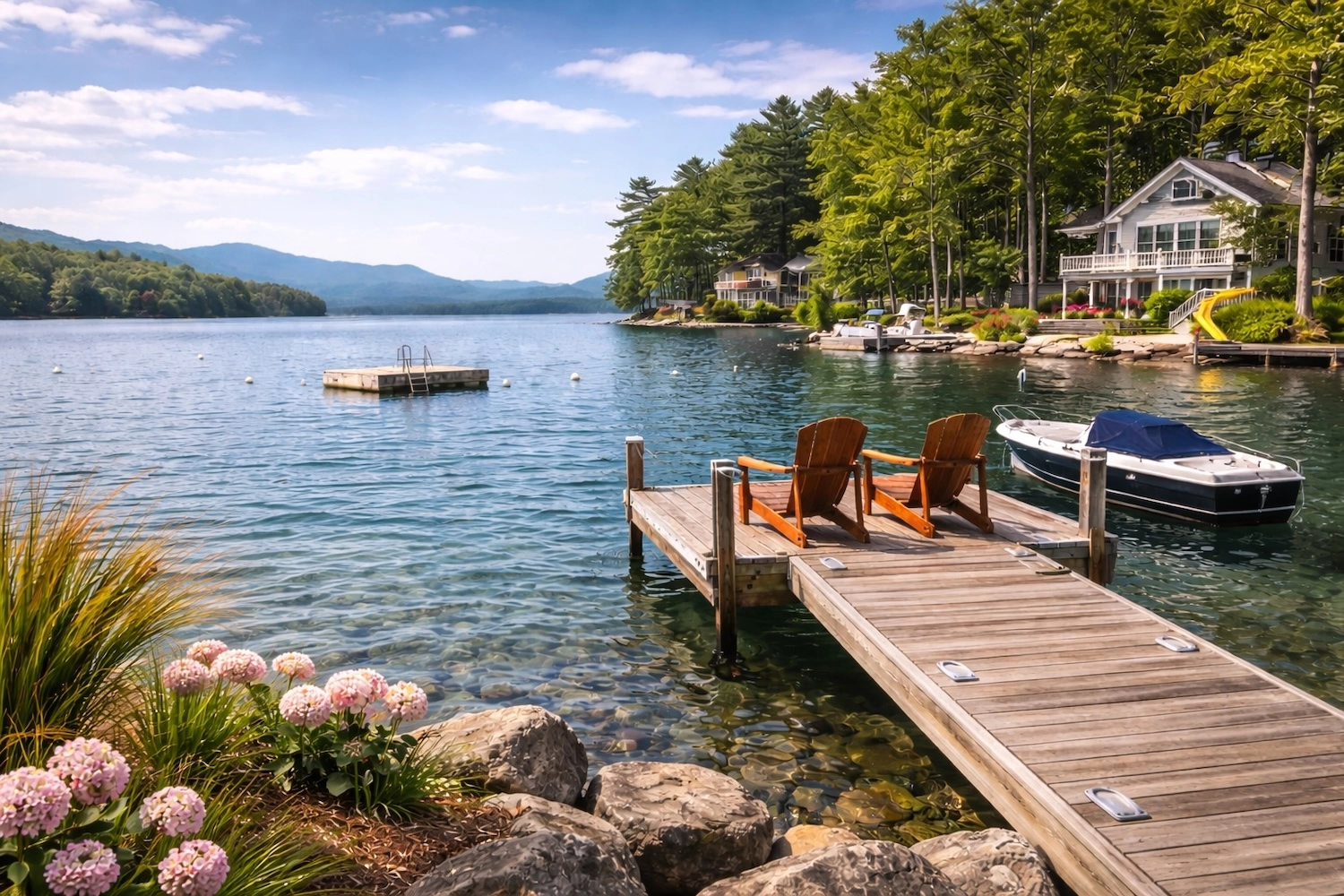
Owning a home on the water is a dream for many New Hampshire buyers. Lakes, ponds and rivers beckon with boating, fishing, and unbeatable sunsets. But the same elements that make waterfront property idyllic also make it highly regulated. Erosion, water quality, and habitat health are all impacted by human activity along the shore. Because water bodies are shared resources, state law sets the rules for what you can and cannot do along the water’s edge. Understanding those rules before you buy will save you money, protect your investment, and make sure you can actually use the property the way you envision. This comprehensive guide explains New Hampshire’s Shoreland Water Quality Protection Act, how dock permitting works, how septic and stormwater systems are regulated, and how to perform due diligence when buying a waterfront home. It also includes real examples of buyers who navigated the permitting process and tips to avoid costly mistakes.
History and Overview of the Shoreland Water Quality Protection Act
New Hampshire’s Shoreland Water Quality Protection Act (SWQPA) was first enacted in 1991 in response to concerns about water quality and shoreline development. The act applies to all public waters in the state, including lakes, ponds, rivers and tidal waters with surface areas greater than 10 acres. The law sets up a protected shoreland zone measured from the reference line (which is generally the high-water mark or mean high tide). Within this zone, which extends 250 feet landward of the water, certain activities are regulated to protect water quality and natural habitats. Over the years, legislators have amended the act to strike a balance between property rights and environmental protection. Today’s rules allow homeowners to maintain and modestly improve their properties while placing reasonable limits on new construction, impervious surfaces, and vegetation removal. Many out-of-state buyers are surprised to learn that lakes and rivers in New Hampshire are public trust resources; you may have private ownership of the land, but you do not own the water, and your rights are subject to the state’s authority to protect public interest.
The act distinguishes between the “primary building line” (often 50 feet from the water) where no primary structures can be located and the “waterfront buffer” where vegetation removal and soil disturbance is highly regulated. Permits are required for many common projects, including adding patios, walkways, or even removing certain trees. The goal is to minimize runoff carrying sediments, fertilizers, and pollutants into the water. When it rains, vegetation acts like a sponge and filters pollutants; hardened surfaces send water racing toward the shoreline. Because of this, New Hampshire’s law includes standards for impervious surface coverage, vegetative cover, and stormwater management. Understanding these standards is key when evaluating a property’s potential and planning any changes.
Setback Requirements, Vegetation Rules, and Shoreline Stabilization
Setbacks determine how close you can build to the water. In most cases, primary structures such as houses must be set back at least 50 feet from the reference line. Accessory structures like sheds or gazebos may be allowed closer, but they still require careful permitting. Variances are possible in certain legacy neighborhoods where lots were platted before modern rules, but new construction generally cannot encroach into the setback. Buyers should review existing surveys and, if none are available, commission one to verify that structures comply. Ignorance of a violation does not excuse you from enforcement, and unpermitted encroachments can delay or derail a sale.
Vegetation within the waterfront buffer is protected because trees, shrubs and groundcovers stabilize soils and filter runoff. The SWQPA uses a point system to regulate removal: taller trees are assigned points based on diameter at breast height, and property owners must maintain a minimum number of points within each 25-foot segment of shoreline. You can prune limbs that pose a safety hazard or remove invasive species, but cutting a mature tree often requires a permit and may have to be offset by replanting. Natural groundcovers like ferns and low shrubs should be left undisturbed; replacing them with lawn grass increases erosion and nutrient runoff. If a property has been cleared beyond what the rules allow, owners may be required to restore the buffer with native plantings as a condition of further improvements.
Shoreline stabilization is another area subject to regulation. While it might seem desirable to build a retaining wall or riprap to control erosion, hard structures can accelerate erosion on neighboring properties and harm aquatic habitat. New Hampshire encourages “soft” stabilization techniques such as native plantings and natural fiber blankets. In some cases, rock or timber structures may be approved if engineers demonstrate that alternatives will not work. Obtaining approval requires plans stamped by a licensed professional and review by the Department of Environmental Services. If you’re considering a property with existing shoreline structures, review the permit history to ensure they are legal and in good repair.
Understanding Dock Regulations
Docks provide direct access to the water for swimming, boating, and relaxing, but they are tightly regulated in New Hampshire. The state distinguishes between seasonal docks (which are removed each winter) and permanent docks. Seasonal docks are often allowed by registration rather than full permit if they meet specific size and location criteria: typically, they must not exceed 6 feet in width or extend more than 40 feet from shore for lakes and 30 feet for tidal waters, though these numbers can vary. Registration involves paying a fee and affixing a sticker to the dock; it does not guarantee unlimited rights. If a dock deviates from the standard dimensions, or if the waterbody is classified as “prime wetland” or has special shoreland rules, a more detailed permit is required. Permanent docks are more complex because they involve driven piles or cribbing that stays in place year-round; these structures always require a permit, and approvals consider navigation, fisheries, and littoral rights of abutters.
When evaluating a waterfront property, confirm whether the existing dock has a valid permit or registration. An unpermitted dock may have to be removed at your expense. If you plan to build a new dock or expand an existing one, start planning early. The application process involves submitting site plans, photographs, and possibly a surveyed plot showing property lines and adjacent structures. Abutting property owners are notified and have an opportunity to comment. Water depth, bottom substrate, and littoral zones (areas critical for fish spawning) all factor into the decision. The review period can take several months, and in some areas, there is a waitlist for moorings. Hiring a local permitting consultant who understands the nuances of the waterbody can smooth the process and avoid surprises.
Maintenance of docks is also regulated. Repairs that do not change the size, location or configuration of a permitted dock are generally allowed, but you may need to file a request for permission to perform maintenance if it involves replacing piles or cribbing. If a storm damages your dock, consult with the Department of Environmental Services before starting reconstruction. Post-storm repairs are usually allowed, but only if you restore the dock to its permitted dimensions. Expanding or reorienting a dock without authorization can lead to fines, removal orders, or additional restrictions on property use.
Septic Systems, Stormwater and Environmental Considerations
Because waterfront parcels often have high water tables and shallow soils, septic systems and stormwater management are critical. New Hampshire requires that septic systems be located at least 75 feet from the reference line. Older camps may have systems closer to the water, but any replacement must comply with current standards unless a waiver is granted. Septic systems need to be sized for the actual number of bedrooms and the anticipated load; if you plan to add bedrooms or convert a seasonal dwelling to year-round use, your septic capacity must support it. Due diligence should include obtaining pump-out records, inspection reports, and in some cases performing a state-approved septic evaluation. A malfunctioning system can contaminate water and may require expensive replacement or upgrade.
Stormwater from rooftops, driveways, and patios picks up oils, fertilizers and sediments. To prevent pollution, the SWQPA limits impervious surfaces within the protected shoreland; typically, no more than 20% of the parcel within the 250-foot zone may be impervious without an approved stormwater management plan. If a property exceeds this threshold, you may need to install infiltration trenches, rain gardens, or pervious pavement to capture and treat runoff. Even if the property is under the limit, adding a patio or paved driveway could push it over. Many buyers and sellers are unaware of these calculations, which can become an issue when trying to obtain a mortgage or insurance. A qualified site planner can model existing impervious areas and propose mitigation strategies to maintain compliance.
Environmental considerations go beyond compliance; they also influence property enjoyment and value. Algal blooms fueled by nutrient runoff can close beaches and create unpleasant odors. Invasive aquatic plants like milfoil can entangle propellers and lower water clarity. Properly managing lawns (or eliminating them), pumping septic systems regularly, and discouraging geese from congregating can help maintain healthy waters. Buyers should research whether the lake or river has an active watershed association; these volunteer groups monitor water quality, educate property owners, and sometimes partner with the state to fund boat inspection stations that prevent the spread of invasive species.
Seasonal vs. Year-Round Use
Many classic camps and cottages around New Hampshire’s lakes were built for summer use, with uninsulated walls, minimal heating, and seasonal water lines. Converting such structures to year-round use may involve significant work: insulating walls and roofs, upgrading electrical panels, drilling a deeper well or heating water lines, and replacing single-pane windows. The SWQPA doesn’t directly regulate insulation, but increasing year-round occupancy often triggers septic and well upgrades. In addition, some private roads around lakes are not plowed in winter. Road maintenance associations, if they exist, may need to vote on winter plowing; costs for plowing private roads can be high, and not all neighbors will support the change. Buyers should review road agreements, meet with association leadership if applicable, and budget for improvements that make year-round occupancy feasible.
Property taxes can also differ between seasonal and year-round homes. Town assessors may classify seasonal dwellings differently, but once a home is winterized and used year-round, assessments often increase. Insurance considerations also come into play: insurers may require evidence of year-round systems (like a heating source sufficient to prevent freeze-ups) before writing a standard homeowner’s policy. If the property will remain seasonal, ensure your insurer is aware; there are specialized seasonal policies that account for periods of vacancy. Discussing your plans with your insurance agent early can help avoid coverage gaps.
The Permitting Process: Working with Local and State Authorities
Most shoreland permits are issued by the New Hampshire Department of Environmental Services (DES), but local zoning boards and planning departments also play important roles. For example, a town may have additional setbacks, floodplain ordinances, or construction permitting requirements. When planning improvements, start by reviewing both state and local regulations. Many projects will require a DES Shoreland Permit by Notification (PBN) or a more detailed Shoreland Permit. The PBN is intended for small projects with minor impact (such as installing a walkway less than 6 feet wide or replacing stairs), while a standard permit covers more extensive work like building a new deck or expanding living space. Applications require detailed plans, photographs, and often a fee.
Because the DES and local boards work independently, you may need to attend multiple hearings or submit separate applications. For example, if your project involves removing a tree that falls under local scenic road protections, you might need a permit from the conservation commission in addition to shoreland approval. Engaging a designer or engineer who is familiar with local boards can save time and frustration. Keep in mind that approvals are not guaranteed; boards consider neighbor input, ecological impact, and precedent. It’s wise to speak with neighbors before submitting an application, to understand their concerns and address them proactively.
Due Diligence Steps for Buyers
When evaluating a waterfront property, due diligence goes beyond a standard home inspection. In addition to the usual structural and mechanical checks, you’ll want to review:
- Property file: Ask the seller for copies of all permits and approvals for docks, seawalls, septic systems, and past renovations. You can also request the property file from the DES to verify compliance.
- Survey: Obtain a current survey showing property boundaries, reference lines, and existing structures. Look for encroachments or violations of setback rules. A survey also clarifies shared access points and easements.
- Septic inspection: Hire a licensed septic inspector to evaluate the condition and capacity of the system. If the home is older, consider a full evaluation with soil probing.
- Water test: Test well water for contaminants such as bacteria, nitrates, arsenic, and radon. Even if there is public water, test for lead if the plumbing is older.
- Shoreline assessment: Walk the shoreline with an eye for erosion, invasive plants, and stormwater flow. Consider hiring an environmental consultant if you are new to waterfront ownership.
- Local ordinances: Review town zoning bylaws, floodplain maps, and any homeowners association rules that may apply to the property. Ask about road maintenance agreements for private roads.
Taking these steps will help you understand the true cost of ownership and avoid unpleasant surprises after closing. Waterfront properties often carry a premium price, but that price should include a well-documented compliance history and infrastructure that supports the lifestyle you envision.
Regional Variations and Municipal Nuances
New Hampshire is known for local control, and waterfront regulations can vary by municipality. Some towns have stricter setback requirements or limit the length and number of docks more than state minimums. Others may regulate rentals, restricting short-term stays or requiring registration for vacation rentals. In areas where loons nest or endangered species are present, additional protections may apply. For tidal waters, the U.S. Army Corps of Engineers also has jurisdiction, and you may need a federal permit for certain dock or seawall projects. It’s not uncommon for out-of-state buyers to assume that state law supersedes local ordinances; in fact, you must comply with whichever regulation is more stringent. A local real estate attorney or land use consultant can help you navigate overlapping jurisdictions and ensure that your plans align with all governing bodies.
Case Study: Navigating a Dock Expansion
Consider the example of a couple who purchased a mid-century cottage on a large lake with a narrow, ageing dock. They wanted a wider platform to accommodate grandchildren and provide easier access for their pontoon boat. Working with a local dock builder, they learned that a wider dock would exceed the standard seasonal dimensions and would likely require a full permit. They hired a surveyor to map the shoreline and identify the littoral rights of neighbors. The resulting application included a detailed plan showing minimal impact on navigation and fish habitat. The couple also met with their downstream neighbor to address concerns about blocking the view. After a three-month review, the DES issued a permit for a slightly modified design that satisfied both parties. Although the process cost time and money, the couple avoided fines and neighbor disputes and now enjoys a safe, legal dock.
Common Pitfalls and How to Avoid Them
New buyers often make the mistake of assuming that existing structures are legal. In reality, unpermitted docks, retaining walls, or additions are common on older properties. If you discover unpermitted work, you may be required to remove it or apply for an after-the-fact permit, which is more expensive and less likely to be approved. Another pitfall is failing to account for impervious surface limits when planning improvements; adding a driveway, patio, and garage in quick succession could push you over the allowable coverage. Finally, some buyers believe that winterizing a seasonal camp is a simple DIY project, only to find that the existing well cannot support year-round use or that the septic system is undersized. Careful planning and consultation with professionals will help you avoid these traps.
Waterfront Living in New Hampshire
Waterfront living in New Hampshire offers incredible beauty and recreation, but it comes with responsibilities. The state’s Shoreland Water Quality Protection Act, dock permitting rules, and environmental protections are designed to ensure that future generations can enjoy clean water and healthy ecosystems. By educating yourself about these regulations, performing thorough due diligence, and engaging qualified professionals, you can safeguard your investment and create a lasting retreat for family and friends. Whether you’re buying your first lakefront cottage or upgrading to a year-round home, take the time to understand the rules, respect the environment, and enjoy the unique privileges that come with living on the water.
Ready to explore waterfront properties? Visit our listings page to see available homes, or contact our team of local experts for a personalized consultation. We can help you find a property that meets your lifestyle goals and guide you through the complexities of waterfront ownership.
Continue your research: Use the New Hampshire waterfront homes guide to compare waterfront rights, property types, regional markets, and parcel-level due diligence.