Open: Sat 1:30 PM - 3:30 PM






Manchester and Nashua represent the twin engines of New Hampshire’s rental real estate market. As the state’s two largest cities, they attract a diverse tenant demographic—young professionals, families relocating from Massachusetts, and workers priced out of Boston’s competitive market. With New Hampshire offering no state income tax and the median state home price hovering around $535,000, these cities provide accessible entry points for first-time investors while offering sophisticated operators substantial value-add opportunities.
Multi-family investing in these markets can yield steady cash flow and appreciation if you carefully analyze cap rates, rents, expenses, and renovation costs. Whether you’re a first-time investor deploying $150,000 or an experienced portfolio holder managing $10 million in assets, understanding the metrics and local dynamics that drive Manchester and Nashua’s rental markets is essential to identifying and executing promising opportunities.
This comprehensive guide explores key factors you should evaluate, from neighborhood dynamics and tenant demographics to financing options, renovation mathematics, and New Hampshire’s evolving landlord-tenant legal landscape. We provide real-world examples, current market data from 2025-2026, and pro tips from local landlords and property managers who navigate these unique market conditions every day.
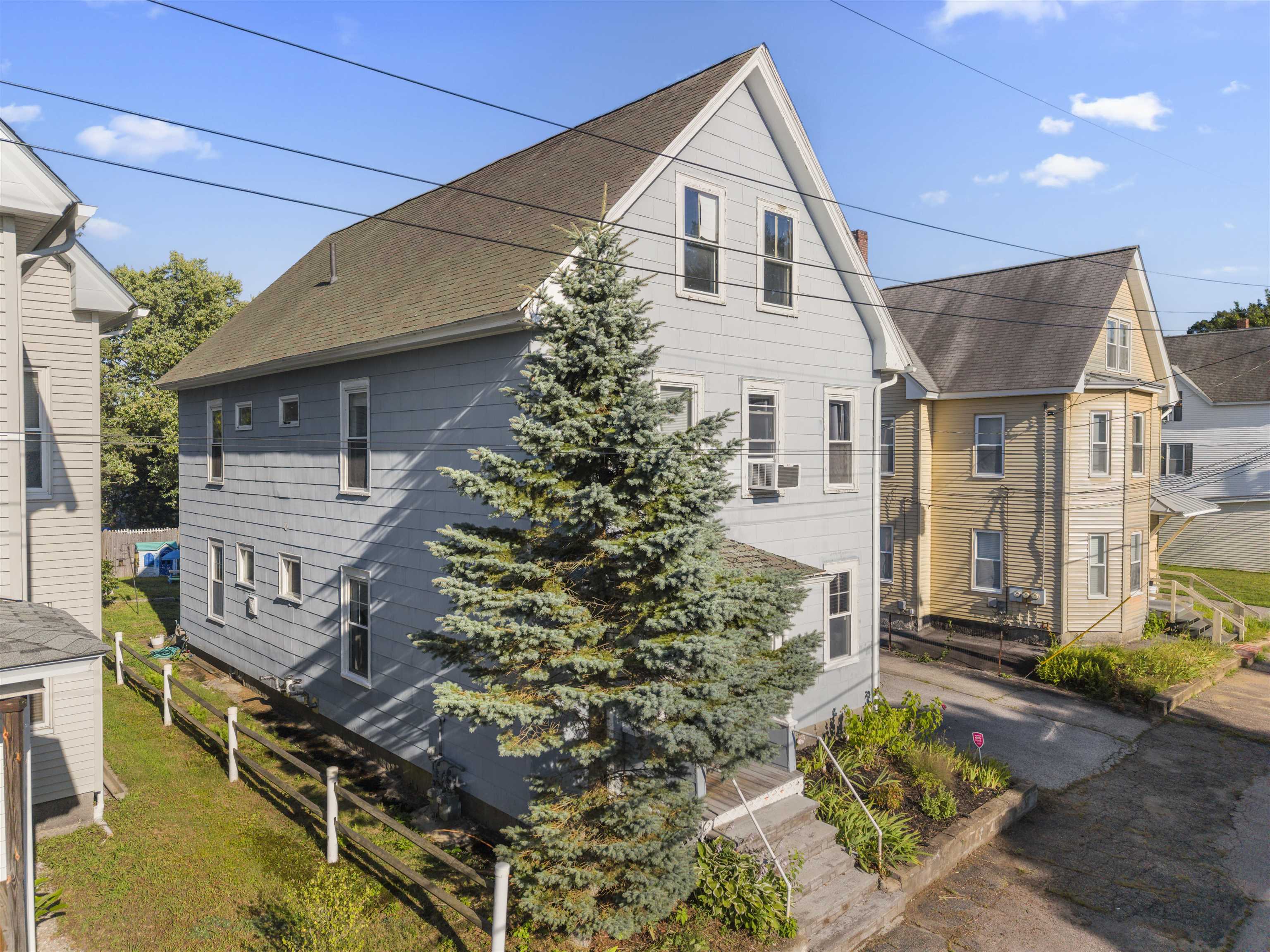
Manchester, located along the Merrimack River, is the largest city in New Hampshire with a diversified economy that includes healthcare, education, and manufacturing. The city boasts a mix of historic triple-deckers (a regional architectural fixture where three apartments are stacked vertically), converted mill buildings from its industrial past, and modern apartment complexes. This architectural diversity means investors can target different tenant profiles at different price points.
Nashua, situated just south of Manchester and only 40 miles north of Boston, has experienced explosive growth as commuters and young professionals seek affordable alternatives to Massachusetts housing costs. Nashua features a blend of small apartment buildings, duplexes, renovated downtown properties, and newer construction. The city’s proximity to the Massachusetts job market creates consistent demand for rental housing.
Both cities have experienced rising rents and strong occupancy rates in recent years. As of 2026, Nashua’s average rent stands at approximately $2,215 annually, with year-over-year appreciation of 4.85%. For context, unit-type averages in Nashua are: studio apartments at $1,741, one-bedroom units at $2,018, two-bedroom units at $2,331, and three-bedroom apartments at $2,538. In Manchester, average rents range from $1,000 for studios to $1,650 for two-bedroom units, offering slightly lower entry points for tenants but potentially higher cap rates for investors.
Demand is fueled by population growth, severely limited housing supply, and the affordability of renting compared to buying. New Hampshire experienced a 20-year high in housing production during 2025, yet analysts report this construction still falls significantly short of demand. This fundamental supply-demand imbalance creates a structural tailwind for multi-family investors. Vacancy rates remain exceptionally tight—well below the 5% threshold that marks a balanced market. New Hampshire’s overall rental vacancy rate sits below 1% for many county and unit-type combinations, providing landlords with considerable pricing power and tenure stability.
Manchester tends to offer slightly higher cap rates (historically 6.5-7.5%) due to larger building sizes, more varied housing stock, and lower relative sale prices. Nashua’s units often command higher absolute rents due to Massachusetts commuter demand, but purchase prices also reflect this premium, often resulting in compressed cap rates (typically 5.5-6.5%). Sophisticated investors exploit this dynamic by targeting value-add opportunities in Nashua while utilizing high-cap-rate Manchester acquisitions as cash-flow engines.
Capitalization rate, or cap rate, is the ratio of a property’s net operating income (NOI) to its market value. It remains the most critical metric for evaluating potential returns on a multi-family investment. To calculate NOI, subtract operating expenses (maintenance, insurance, property management, taxes, utilities, and reserves) from gross rental income. The formula is:
Cap Rate = Net Operating Income / Property Market Value
For example, a four-unit building generating $60,000 in annual gross rental income with $18,000 in annual operating expenses produces an NOI of $42,000. If the property is valued at $600,000, the cap rate is 7.0% ($42,000 / $600,000).
Investors generally compare cap rates within the same market to gauge relative value. A property with an 8% cap rate may indicate higher risk (poor condition, challenging neighborhood, or below-market rents), whereas one with a 5% cap rate may suggest a premium asset in a highly desirable area or one with absentee ownership selling below fair market value. Keep in mind that cap rates are inversely influenced by interest rates; as borrowing costs fluctuate, so do investor return expectations. In 2025-2026, with mortgage rates moderating from their 2023 peaks, cap rates have remained relatively stable across northeastern markets, though national multifamily averages hover around 4.75% for core properties in gateway markets, with secondary and value-add markets like Manchester and Nashua commanding premiums of 75-150 basis points above core averages.
When evaluating a property, consider whether the cap rate reflects current rents or projected rents after improvements. Value-add opportunities—properties with lower rents due to outdated kitchens, underutilized space, or deferred maintenance—may have low initial cap rates (sometimes 4-5%) but offer potential for substantially higher returns if disciplined renovations increase income by 15-25%. This distinction between “in-place cap rates” and “stabilized cap rates” is crucial when analyzing properties.
Accurate rent projections are the foundation of your pro forma analysis. Research current market rents for comparable units by reviewing online listings on Apartments.com and Zillow, consulting local property management reports, analyzing rent surveys from the NH Housing Finance Authority, and directly reaching out to property managers leasing similar units in your target neighborhoods.
Manchester and Nashua’s vacancy rates are characteristically low (often below 3% in desirable neighborhoods), but they can vary significantly by neighborhood, building age, and unit type. Class C apartments (older buildings with basic amenities) or units near college campuses may experience more frequent turnover and rent pressure, while Class A downtown lofts with modern finishes may attract longer-term, higher-quality tenants willing to pay 15-30% premiums. Downtown Nashua and Manchester’s North End have experienced particular appreciation, with renovated attached and small-lot properties commanding strong rents due to proximity to employment centers, transit, and services.
Account for neighborhood-specific dynamics. Nashua’s French Hill and Downtown neighborhoods command Tier 1 rents due to walkability and job proximity. Manchester’s North End and downtown similarly appeal to service-industry workers and young professionals. Conversely, West Side and South End Manchester properties target working families and may have modest rent premiums despite slightly higher vacancy risk.
Be conservative with vacancy assumptions, especially for larger buildings or neighborhoods with higher tenant turnover. A prudent model for Manchester and Nashua might assume 3-5% vacancy for Class B properties and 5-8% for Class C stock, even though actual market vacancy is lower. This conservative approach protects your analysis if you need to refinance or sell during a market contraction.
New Hampshire does not currently have statewide rent control, a major advantage compared to Massachusetts or Vermont. However, beginning January 1, 2026, landlords must offer at least one non-electronic payment option for rent, prohibiting rent payment via electronic funds transfer only. Factor in administrative compliance costs (approximately $500-$1,500 annually depending on tenant count and payment processing infrastructure).
Operating expenses include property management fees (typically 5-8% of gross income for professional management, or $0 for self-management with your sweat equity), utilities (if landlord-paid), insurance, property taxes, maintenance, and repairs. For older properties common in Manchester, budget for higher maintenance costs such as boiler replacements ($4,000-$8,000), roof repairs ($15,000-$40,000 for a 12-unit building), or asbestos abatement ($3,000-$10,000+ depending on scope).
In Manchester and Nashua, property taxes vary significantly by neighborhood and property class. As of 2026, Manchester’s effective tax rate for multi-family properties ranges from approximately 1.1-1.4% of assessed value, while Nashua’s rates are typically 1.0-1.25%. Factor in upcoming tax reassessments (typically every 3-5 years), which can increase taxes by 10-25% in neighborhoods experiencing revitalization. Insurance premiums may be higher for multi-family properties with outdated wiring or plumbing, so investing in upgrades (estimated $2,000-$5,000 per unit for major mechanical/electrical systems) can reduce premiums by 10-15% annually.
Build adequate reserves for capital expenditures (CapEx) such as replacing heating systems ($8,000-$15,000 per unit), paving parking lots ($12,000-$25,000), or renovating kitchens and baths. CapEx reserves are separate from operating reserves and ensure you can fund major projects without depleting cash flow. Industry standard is to reserve 5-8% of gross income annually for CapEx. For a twelve-unit building generating $120,000 in annual gross income, this translates to $6,000-$9,600 per year set aside for long-term capital needs. Lenders and institutional investors often require documented CapEx reserves as part of underwriting, and properties without adequate reserves frequently experience operational stress.
Renovation plays a pivotal role in multi-family investing. The key to profitable renovations is understanding the rent premium associated with each improvement. Cosmetic renovations—painting, new flooring, modern lighting fixtures, appliance updates—can boost rents by $75-$200 per month with minimal capital expenditure ($2,000-$5,000 per unit). More extensive renovations such as adding laundry facilities, improving floor plans, or updating kitchens and baths yield higher rent increases but require substantially more capital.
Sample Renovation ROI Calculation: Updating bathrooms in a two-bedroom unit costs $8,000-$12,000 (labor, fixtures, tile, plumbing). Post-renovation, you can raise rent from $1,650 to $1,850 per month, an increase of $200. The additional annual income of $2,400 ($200 × 12 months) results in a simple payback period of 3.3 to 5.0 years. If you factor in the property appreciation from improved condition (typically 2-3% annually on the property value), plus the reduced tenant turnover from higher-quality units (reducing turnover-related costs), the true ROI approaches 12-18% annually—exceeding the 7-10% cost of capital for most investors.
Larger projects like adding units, finishing basements, or converting offices to bedrooms may significantly increase cash flow and property value. For instance, finishing a 600-square-foot basement in a 4-unit building to create a separate efficiency unit could cost $30,000-$50,000 but add $800-$1,200 monthly rent, generating an additional $9,600-$14,400 annually. After accounting for utilities, maintenance, and management ($2,400-$3,600 annually), incremental NOI reaches $6,000-$11,000, yielding a 12-37% annual return. However, such projects require zoning approvals, building permits, and longer construction timelines, often taking 4-8 months from planning to lease-up.
Always include 15-25% contingency funds for unexpected issues such as mold, structural repairs, code compliance updates, or hidden hazards. Older Manchester and Nashua buildings frequently harbor surprises: knob-and-tube wiring requiring replacement, lead paint abatement (especially in pre-1978 properties), asbestos in pipe insulation, or poor foundations. Budgeting realistic contingencies separates successful renovators from those who face financial stress mid-project.
Work with local contractors who understand Manchester and Nashua building codes, have experience with multi-family properties, and maintain strong relationships with municipal inspectors. Get multiple bids (minimum three) to avoid overpaying and ensure estimates accurately reflect current material and labor costs. In 2025-2026, New Hampshire renovation costs range from $10,400 to $84,655 depending on scope, though multi-family work typically runs higher due to coordination complexity and code requirements.
Financing multi-family properties offers several pathways, each with distinct advantages and constraints. Conventional loans through banks or mortgage brokers typically require 20-25% down payments, have 25-30 year amortization periods, and current rates (as of 2026) range from 5.8-6.8% depending on credit, property condition, and lender specialization. Conventional financing favors stabilized properties with clear pro formas and strong historical performance.
Commercial loans from local or regional banks frequently offer more flexibility regarding property condition, renovation scope, and borrower experience. Many New Hampshire banks—including Eastern Bank, Granite State Bank, and others with strong local presences—have specialized multi-family lending teams familiar with Manchester and Nashua markets. Interest rates are typically 50-100 basis points higher than conventional programs but include more flexibility on recapture clauses and renovation costs.
Government-backed FHA multi-family loans, insured by the Federal Housing Administration, require 10-15% down payments and offer terms up to 40 years, making them attractive for investors emphasizing cash flow over rapid equity buildup. However, FHA has extensive property standards, insurance requirements, and approval timelines (typically 90-120 days).
Owner-occupied financing presents a compelling advantage. If you plan to live in one unit of a duplex, triplex, or small multi-family building, you may qualify for residential financing with down payments as low as 3-5%, substantially lower than commercial products. House hacking—owner-occupying while renting other units—is a time-tested strategy in Manchester and Nashua, allowing investors to build equity rapidly while reducing their living expenses. A investor with $40,000 to deploy might purchase a $400,000 two-unit property with 10% down in residential financing, live in one unit rent-free while receiving $1,300 monthly rent from the other, and use the $1,300 to offset mortgage payments. Over five years, this generates $78,000 in mortgage principal paydown plus property appreciation.
Private or hard-money loans, typically from non-institutional lenders or investment groups, provide short-term capital for renovation-heavy acquisitions. Interest rates range from 10-14%, with origination fees of 2-3% and terms of 12-36 months. They are invaluable for projects where you plan to force appreciation through renovation, then refinance into long-term financing once the property is stabilized. For instance, purchasing a distressed 6-unit building with 30% down funded by a hard-money loan, investing $60,000 in unit renovations over eight months, then refinancing into a conventional loan once rents increase can generate 20-40% annual returns during the hold period.
Always analyze the cost of borrowing and your exit strategy before choosing a financing method. Model scenarios where interest rates rise by 1-2%, where your lease-up takes 50% longer than projected, and where contingency renovations exceed estimates. Conservative underwriting prevents stress-induced decision-making during market downturns.
New Hampshire maintains a relatively landlord-friendly legal environment compared to neighboring Massachusetts and Vermont, but recent legislative changes require careful attention. Effective January 1, 2026, landlords may no longer require tenants to pay rent or other lease obligations solely via electronic funds transfer; landlords must offer at least one non-electronic payment option (check, money order, or in-person payment). This adds minimal operational burden but requires establishing payment processing infrastructure and communicating payment methods to tenants.
Security deposits in New Hampshire are capped at one month’s rent or $100, whichever is greater. Upon move-out, landlords have 30 days to return deposits along with itemized deductions limited to unpaid rent, damages beyond normal wear and tear, or direct restoration expenses. Security deposit compliance is straightforward but requires clear documentation—photograph properties before and after tenancy, maintain detailed repair receipts, and communicate deductions to tenants in writing to avoid disputes.
Rental agreements must include essential information: landlord’s name and contact information, rent amount and due date, lease term, and rules affecting tenant use. For month-to-month tenancies, landlords must provide at least 30 days’ notice before increasing rent or terminating tenancy. For fixed-term leases, landlords can increase rent upon renewal with appropriate notice (typically 30 days prior to lease expiration).
Domestic violence protections, effective January 1, 2025, grant special rights to tenants experiencing domestic violence or sexual assault, potentially providing defenses against eviction. Ensure your lease language and tenant communications comply with these protections—consult a New Hampshire attorney if you encounter a tenant claiming these rights.
All tenants are legally entitled to rental units that meet basic health, safety, and structural standards. If a landlord fails to maintain habitability, tenants may withhold rent, repair-and-deduct, or terminate the lease. Common habitability defects include lack of heat, non-functional plumbing, dangerous electrical wiring, and pest infestations. Proactive maintenance prevents these issues and the associated legal exposure.
Case Study 1: Cosmetic Value-Add in Manchester North End
A first-time investor purchased a four-unit property in Manchester’s North End neighborhood for $520,000 (13% below asking price due to cosmetic issues). The building required painting, new appliances, updated flooring, and lighting fixtures totaling $25,000. After renovations completed over 8 weeks, rents increased from an average of $950 to $1,200 per unit, boosting gross monthly income by $1,000 (from $3,800 to $4,800 annually, +26%). Operating expenses of $1,440 monthly included property management ($320), taxes ($500), insurance ($200), utilities ($220), and maintenance reserves ($200). Net operating income increased from $1,520 to $2,360 monthly, or from $18,240 to $28,320 annually. The capitalized value increase (at a 7% cap rate) was approximately $145,000 ([$28,320 - $18,240] / 0.07). The investor’s $25,000 renovation recovered its cost in just 11 months, then generated positive returns indefinitely. By year five, property appreciation plus mortgage principal paydown and cash flow totaled approximately $180,000 of investor equity gain.
Case Study 2: Rent Optimization in Nashua Downtown
A seasoned investor acquired a three-unit property (triplex) in Nashua’s Main Street neighborhood for $585,000, financed with a 25% down conventional loan at 6.2% interest. The property had long-term tenants paying below-market rents: $1,200, $1,200, and $1,100 monthly. Rather than aggressive renovations, the investor methodically upgraded individual units as leases expired, offering tenants modest rent increases while providing upgraded finishes (new cabinets, counters, paint, flooring). Over 18 months, unit turnover was orchestrated to enable upgrades. Upon lease renewal, new tenants were quoted $1,400, $1,400, and $1,300—increases of $200, $200, and $200 respectively. Gross income increased from $36,000 to $50,400 annually (+40%). With stable operating expenses, NOI increased by $14,400 annually. The property’s stabilized value increased by approximately $206,000 at a 7% cap rate ($14,400 / 0.07). After two years, the investor refinanced into a new 6% conventional loan, capturing $120,000+ in equity to deploy toward the next acquisition. Subsequent cash flow of $12,000 annually from the triplex continued indefinitely, providing a stable foundation for the portfolio.
Case Study 3: Major Capital Play in Manchester West Side
A small partnership (three passive investors) purchased a ten-unit apartment building in Manchester’s West Side neighborhood for $780,000 with an in-place cap rate of 6.0%. Analysis revealed significant deferred maintenance: the 30-year-old roof required replacement ($45,000), boilers and heating systems needed upgrades ($60,000), and electrical panels required modernization ($25,000). Total CapEx was estimated at $130,000, financed through a bridge loan at 11% interest on a 24-month term. The partnership executed renovations over 9 months, completing work on schedule and under budget at $120,000 invested.
Upon completion, the partnership systematically increased rents on unit turnovers from an average of $1,150 to $1,400—a $250/unit increase, or $30,000 additional annual gross income. Operating expenses (property management at $1,100/month, taxes at $500/month, insurance at $350/month, utilities at $800/month, and reserves at $400/month) totaled $40,800 annually. NOI improved from $46,800 ($720,000 gross income minus $673,200 operating expenses on the original ten units) to approximately $89,200 ($900,000 gross income at stabilized rents minus $40,800 operating expenses). The stabilized value at a 7% cap rate was approximately $1,275,000—substantially above the $780,000 acquisition price. After 20 months of holding and renovation, the partnership refinanced into a 30-year conventional loan at 6.3%, extracting $450,000 in cash to return to investors and retain $400,000 in equity within the property. Subsequently, monthly cash flow of approximately $3,400 (after all debt service) provided passive income to the investors, while the property continued appreciating at 2-3% annually due to rent growth and market dynamics.
Within Manchester and Nashua, neighborhood selection dramatically impacts returns. Desirable micromarkets include Manchester’s North End (walkable, diverse tenant base, appreciating), Downtown Manchester (youth-oriented, job growth), Nashua’s Downtown and French Hill (proximity to employment, transit access), and Nashua’s Elm Street area (revitalization underway). These neighborhoods command 10-20% rent premiums and attract quality tenants, justifying slightly compressed cap rates (5.5-6.5%) through superior cash flow stability and appreciation.
Evaluate neighborhoods for job density, transit access, walkability, schools (if targeting families), and revitalization momentum. Consult crime statistics (Manchester and Nashua Police Departments publish crime reports), speak with local property managers about neighborhood trends, and analyze recent sales comps to understand appreciation trajectories. Properties in high-potential neighborhoods purchased modestly often appreciate faster than larger, cheaper buildings in stagnant areas.
Successful multi-family investors stress test their assumptions against adverse scenarios. Model scenarios assuming rent growth stalls for 12 months, vacancy increases to 8%, or a key mechanical system requires replacement mid-hold. Ensure your down payment and contingency reserves are adequate to survive unexpected challenges without forced sales at unfavorable prices.
Maintain insurance with adequate coverage limits ($1 million to $2 million for buildings with 5-20 units), verify that property management systems protect tenants’ rights while documenting lease compliance, and build relationships with capable contractors who provide reliable service at fair pricing.
Manchester and Nashua offer robust opportunities for multi-family investing in 2025-2026, provided you conduct thorough due diligence and align your strategy with market fundamentals. Focus on accurate cap rate calculations, realistic rent projections informed by current market data, and conservative estimates for vacancies and expenses. Consider renovation potential and ensure you have a clear plan for financing and reserves that accounts for unexpected contingencies.
The most successful investors combine disciplined underwriting with intimate market knowledge. They understand neighborhood trajectories, develop relationships with reliable contractors and property managers, and remain patient—holding strong assets through cycles rather than chasing speculative opportunities. The combination of New Hampshire’s no-state-income-tax advantage, tight rental markets, strong demographic tailwinds from Massachusetts migration, and accessible entry-level pricing makes Manchester and Nashua compelling markets for building multi-family portfolios.
With the right strategy, multi-family properties in these cities can generate sustainable monthly cash flow, tax-advantaged returns through depreciation, and meaningful appreciation. Tap into local resources—experienced agents, property managers, lenders, and contractors—to gain insights and mitigate risks. Investing in New Hampshire’s largest cities can be a profoundly rewarding endeavor when you pair market knowledge with disciplined execution.
Bean Group, brokered by eXp Realty, specializes in helping investors identify, analyze, and execute multi-family acquisitions throughout New Hampshire. Our team combines local market expertise, transaction experience, and connections to lenders, contractors, and property managers. Whether you’re acquiring your first duplex or scaling a portfolio, we provide the strategic guidance and market insights to maximize returns. Contact Bean Group today to discuss your multi-family investment strategy. Let’s build wealth together in New Hampshire’s most dynamic rental markets.