


Converting Seasonal Homes to Year-Round Residences in New Hampshire: A Comprehensive Guide to Codes, Compliance, and Costs
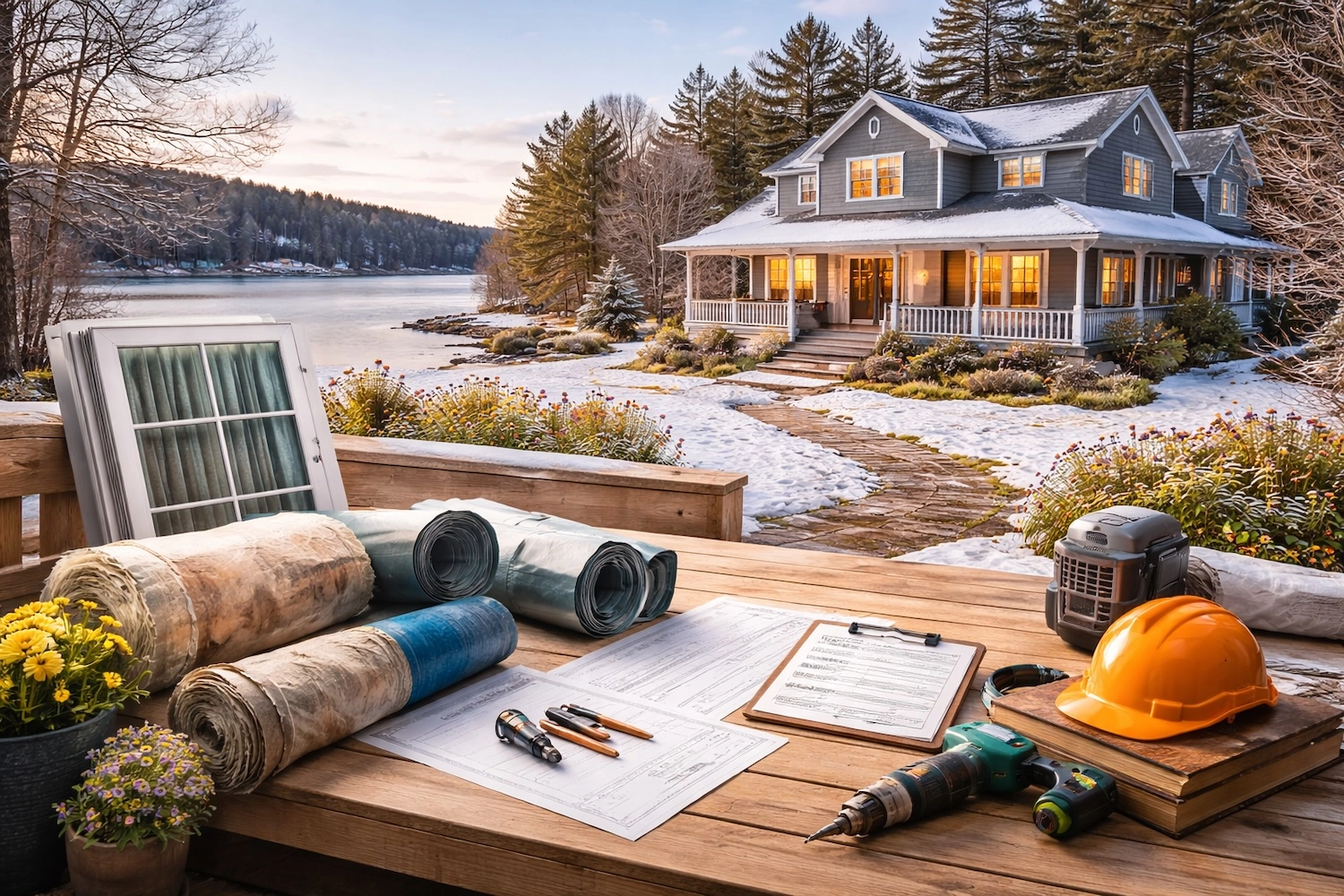
New Hampshire’s lakes and mountains are dotted with seasonal camps and cottages—cozy structures originally built for warm-weather retreats that have served generations of families seeking escape from urban life. As remote work becomes increasingly commonplace and year-round tourism grows throughout the state, many property owners are considering converting these seasonal properties into full-time residences. The potential rewards are compelling: a four-season getaway that generates rental income during peak seasons, serves as a primary residence, or functions as a flexible retirement retreat. However, the conversion process is far more complex than simply installing a furnace and closing storm windows. It requires comprehensive planning, substantial financial investment, strict compliance with New Hampshire’s building codes, and approval from multiple government agencies. This guide provides homeowners, investors, and real estate professionals with detailed, actionable information about transforming a seasonal property into a properly permitted, fully functional year-round residence.
Understanding New Hampshire’s Seasonal Property Landscape
According to the New Hampshire Association of Realtors (NHAR), the state experienced 5,822 building permits issued in 2024, reflecting steady interest in property development despite economic headwinds. Within this landscape, seasonal properties represent a significant subset of the residential market, particularly throughout the Lakes Region and scattered throughout rural areas. These seasonal structures typically differ fundamentally from year-round homes in construction standards, system design, and regulatory classification.
Seasonal homes are generally built to different standards than year-round residences because they were designed for occupancy during temperate months only. Common characteristics include minimal insulation (often just 2–4 inches in walls versus the 6–10 inches required for year-round homes), limited or absent heating systems relying instead on wood stoves or small space heaters, seasonal water supplies drawn directly from lakes or delivered via above-ground plumbing that must be drained before winter freezes, and uninsulated or minimally protected foundations sitting on piers, posts, or shallow concrete pads. These homes aren’t designed for continuous winter occupancy and may be explicitly restricted to seasonal use by zoning ordinances or private road maintenance agreements that explicitly exclude winter plowing.
The financial appeal of converting a seasonal property is undeniable. In 2025, the median single-family home price in New Hampshire’s Lakes Region reached $650,000, while median statewide prices hit $566,250 in June 2025, up 4.9 percent from June 2024. Owners converting seasonal properties to year-round status can often realize significant value appreciation, particularly if they upgrade their properties to meet modern energy efficiency standards. Through September 2025, the median single-family home price statewide settled at $532,000, reflecting some stabilization after years of rapid appreciation.
The Legal Framework: Zoning, Permits, and the 2021 International Residential Code
Converting a seasonal property to year-round use requires both physical upgrades and administrative approvals from multiple government entities. New Hampshire’s decentralized regulatory structure means that while the state establishes minimum building code standards through the 2021 International Residential Code (IRC) and 2021 International Building Code (IBC)—effective July 1, 2024—individual municipalities retain authority to enforce these codes and establish additional local requirements that may exceed state minimums.
Zoning and Change of Use Permits: The first critical step involves consulting with your town’s building inspector or code enforcement office to determine whether your property is zoned to permit year-round residential use. Many towns require a formal change of use permit when altering a seasonal structure’s occupancy classification. This permit application triggers review by the local building department and may require additional review by the planning board, zoning board of adjustment, or health department depending on local procedures.
In towns like Windham, Holderness, and Kingston, New Hampshire, specific municipal codes address seasonal conversions directly. For example, Kingston’s building inspection office provides a dedicated application process for seasonal residence conversions, requiring detailed documentation of how the property will meet year-round occupancy standards. Similarly, Windham’s zoning ordinance Section 1200 establishes explicit requirements for seasonal conversion projects, recognizing the frequency of such conversions in communities with established lake properties.
State Code Compliance Requirements: Under New Hampshire’s 2021 IRC standards, change of use from seasonal to year-round residency triggers several mandatory compliance measures. The property’s waste disposal system (septic system) must meet state and local regulations designed for year-round occupancy, which typically requires higher design flows than seasonal systems. Before conversion approval, the building inspector will typically require submission of detailed plans addressing insulation values, mechanical heating systems, updated septic system design, water supply configuration, electrical system capacity, and complete site layout documentation.
Shoreland Protection Considerations: If your seasonal property is located within 250 feet of a lake, river, or other water body, New Hampshire’s Shoreland Protection Act (RSA 483-B) applies additional regulatory requirements. Properties near water must demonstrate compliance with water quality protection standards, vegetative buffer requirements, and impact assessment protocols. Properties in designated scenic areas or within town conservation districts face additional scrutiny. These requirements may necessitate consulting with an environmental engineer to demonstrate compliance before permits are issued.
Septic System Requirements and Winterization Protocols
The septic system represents perhaps the most significant infrastructure challenge when converting seasonal properties. New Hampshire’s Department of Environmental Services (DES) Subsurface Bureau oversees all septic system design and approval through the Septic System Designer and Installer licensing program. All septic system design must be completed by a licensed New Hampshire septic system designer, with installation performed by licensed installers, and both Approval for Construction and Approval for Operation must be obtained before the system is utilized.
Upgrading to Year-Round Capacity: Seasonal systems are routinely designed for flow rates of 300–500 gallons per day, reflecting part-time occupancy patterns typical of summer camps. Converting to year-round use requires redesigning the system for continuous daily use, typically increasing design flow to 750–1,500 gallons per day depending on the number of bedrooms and bathrooms. This often means the existing septic system cannot be expanded and must be completely replaced.
A new year-round septic system typically costs between $8,000 and $15,000 depending on soil conditions, lot size, and distance from the building. Properties on ledge, with poor drainage, or in environmentally sensitive areas may require engineered alternative systems using sand filters, constructed wetlands, or mound systems, potentially doubling or tripling installation costs to $20,000–$35,000. Recent amendments to New Hampshire’s Administrative Rules Chapter Env-Wq 1000, effective February 1, 2026, establish updated design standards reflecting current environmental protection practices.
Winterization and Winter Maintenance: Seasonal septic systems must be winterized before freezing temperatures arrive, typically involving draining all above-ground components, shutting off water supplies, and allowing the system to go dormant. Year-round systems require protection from freezing through buried installation below the frost line (typically 4–5 feet in New Hampshire), insulation of distribution pipes, and sometimes installation of heat tape on vulnerable components. The DES recommends that all septic tanks be pumped every 2–3 years to maintain proper function and prevent system failure during harsh New England winters.
Water Supply Winterization: Many seasonal camps rely on shallow wells or surface water drawn from lakes. Year-round properties require a deep well system with frost-proof components extending below the 4–5 foot frost line typical in New Hampshire. Installation of a new deep artesian well costs $3,500–$8,000 depending on drilling depth and local geological conditions. In addition, all above-ground piping must be moved into heated spaces or insulated with freeze protection, often requiring installation of heat-trace cables costing $800–$2,000 for a typical property.
Building Envelope Upgrades: Insulation, Windows, and Foundation Improvements
The comfort and efficiency of a year-round home depend primarily on the building envelope—walls, roof, windows, and foundation. New Hampshire’s adoption of the 2015 International Energy Conservation Code (IECC) with amendments establishes specific insulation requirements. For residential properties in New Hampshire’s climate zone, walls typically require R-15 insulation, ceilings R-49 (attics) or R-30 (with raised trusses), floors over unconditioned spaces R-30, and basement walls R-15. These requirements far exceed what most seasonal cottages provide.
Wall Insulation Upgrades: Most camps have minimal or no wall insulation, perhaps just felt vapor barriers. Upgrading requires blown-in cellulose insulation, fiberglass batts, or closed-cell spray foam. Blown-in cellulose costs approximately $1.83–$1.96 per square foot, making insulation upgrades for a 1,500 square-foot cottage roughly $2,745–$2,940 in material and labor. Spray foam is more expensive at $3.00–$5.00 per square foot but provides superior air sealing and moisture control. Many contractors recommend 6–8 inches of insulation in walls for optimal New Hampshire performance.
Roof and Attic Treatment: Ice dams are endemic to under-insulated roofs in New Hampshire's climate, occurring when warm interior air melts snow on the roof while exterior air is below freezing, causing water to back up under shingles and leak into walls. Proper attic insulation (R-49 minimum) combined with adequate ventilation prevents ice dams. Adding 8–12 inches of blown insulation to an attic typically costs $2,000–$4,000 for a cottage-sized structure. Air sealing around penetrations, ceiling plane boundaries, and rim joists prevents heat loss and reduces ice dam formation. Some properties benefit from metal roofing systems with proper underlayment, which improve durability and shedding; these cost $8,000–$15,000 but may last 50+ years versus 20–25 years for conventional asphalt shingles.
Window and Door Replacement: Single-pane or old double-pane windows in seasonal cottages should be replaced with modern energy-efficient units meeting IECC standards. Triple-pane windows with low-emissivity coatings and insulated frames minimize heat loss. Window replacement costs approximately $400–$800 per opening for quality units, meaning a cottage with 12 windows might require $4,800–$9,600 investment. Insulated fiberglass or composite entry doors with thermal breaks cost $800–$1,500 each and should have weatherstripped frames and thresholds.
Foundation and Frost Protection: Many seasonal cottages sit on piers or posts, leaving the underside exposed to winter temperatures. Water pipes freeze, structural materials degrade, and frost heave can cause settling and cracking. Converting to year-round use typically requires either constructing a frost-protected shallow foundation (FPSF) system or adding insulated skirting around perimeter posts combined with underground frost-protected drainage. Shallow foundation systems cost $15,000–$30,000 depending on the cottage perimeter and existing foundation condition. Insulated skirting with frost protection may cost $5,000–$10,000 as a less expensive interim solution.
Heating System Selection and Installation
Many seasonal camps rely on wood stoves or small space heaters inadequate for continuous winter heating. Year-round residences require reliable, efficient systems capable of maintaining 68–70 degrees Fahrenheit during New Hampshire's coldest months when outdoor temperatures regularly drop to -10 to -20 degrees Fahrenheit.
High-Efficiency Propane Furnaces: Propane furnaces with AFUE (Annual Fuel Utilization Efficiency) ratings of 95 percent or higher provide reliable heat. Installation with ductwork throughout the cottage costs $6,000–$12,000. Operating costs typically range from $1,200–$2,400 annually depending on cottage size and insulation quality, though this varies with propane prices.
Ductless Mini-Split Heat Pumps: These systems provide both heating and summer cooling, operating efficiently down to approximately 5 degrees Fahrenheit. A two-zone system for a 1,500 square-foot cottage costs $8,000–$12,000 installed. Heat pumps offer superior efficiency and flexibility, though installation requires electrical upgrades and refrigerant lines. Annual heating costs with heat pumps typically run $1,000–$1,800.
Radiant Floor Heating: Hydronic radiant systems distribute warmth through tubing in floors, providing even heating and eliminating drafts. Installation during renovation costs $8,000–$15,000 depending on square footage. These systems integrate well with heat pumps or propane boilers and provide exceptional comfort, though installation requires significant structural access.
Electric Baseboard Heating: The least expensive option to install ($3,000–$6,000), electric baseboard heating provides reliable zone-based heating but incurs higher operating costs ($2,000–$3,500 annually) without efficient insulation upgrades.
Electrical, Plumbing, and Utility System Upgrades
Electrical Service Expansion: Seasonal cottages frequently operate on 60-amp or 100-amp service panels, inadequate for year-round residences with modern appliances, heating systems, and contemporary electrical demands. Upgrading to 200-amp service costs $2,000–$5,000. New circuits must be installed for GFCI-protected outlets in bathrooms and kitchens (required by 2021 NEC standards), circuits for dedicated heating systems, and adequate capacity for electric water heaters or other major appliances.
Plumbing System Winterization: Seasonal cottages typically have exposed water pipes that drain seasonally. Converting to year-round use requires relocating all exposed piping into heated interior spaces or insulating with pipe wrap and heat-trace cables. Hot water delivery must be reliable, requiring either a tankless electric or propane water heater, a heat pump water heater, or an on-demand system. Installation of new plumbing with proper insulation costs $3,500–$7,000 depending on complexity.
Internet and Broadband: Year-round and rental occupancy increasingly depend on reliable internet connectivity. Remote property locations may lack cable broadband, requiring alternatives such as satellite internet (Starlink: $600 equipment + $120/month), fixed wireless solutions where available, or fiber connections in developing areas. Budget $800–$1,500 for installation of internet infrastructure.
Cost Analysis: Typical Seasonal-to-Year-Round Conversion Budget
A comprehensive case study provides realistic cost expectations. A family-owned lakeside cottage in Belknap County, typical of properties throughout the Lakes Region, underwent conversion to year-round occupancy. The 1,500 square-foot structure, originally built in the 1970s with minimal insulation and no heating system, required the following upgrades:
- Septic System Replacement: $12,000 (new design for 1,000 gpd)
- Well Drilling and Winterization: $5,500
- Wall and Attic Insulation (spray foam, R-20 walls, R-49 attic): $12,800
- Window and Door Replacement (14 windows, 2 doors): $8,900
- Roof Repair and Metal Roofing: $14,000
- Heat Pump System (two-zone mini-split): $10,200
- Plumbing Upgrades and Hot Water System: $6,200
- Electrical Service Upgrade and Circuits: $4,100
- Foundation Insulation and Skirting: $7,800
- Road Association Membership and Plowing: $1,200/year (amortized)
- Permits, Inspections, and Engineering: $3,500
Total Project Cost: $86,100
This represents approximately $57 per square foot of renovation cost, well within industry norms for comprehensive seasonal-to-year-round conversion. Post-renovation, the property appraised $85,000 higher than its pre-conversion seasonal value, realizing positive return on investment within three years. Annual operating costs (heating, water, septic maintenance, insurance) increased from approximately $2,400 (seasonal) to $6,800 (year-round), representing reasonable expenses for full-time residence.
Financing Options for Seasonal Home Conversions
Converting a seasonal home typically requires significant upfront investment, often $75,000–$200,000 depending on existing condition and desired upgrades. Several financing mechanisms are available:
Construction Loans: Traditional lenders offer construction loans that disburse funds as work progresses, then convert to permanent mortgages upon completion. Interest-only payments during construction minimize carrying costs. Lenders typically require detailed scopes of work, contractor bids, and professional engineer reports before approval. Construction loan rates typically run 0.5–1.0 percent above standard mortgage rates.
Home Equity Loans and Lines of Credit (HELOC): If you own other real estate with equity, home equity loans or HELOCs offer accessible financing at rates typically 0.5–1.0 percent above prime. These are effective for owner-occupied conversions where the seasonal property will become your primary residence.
FHA 203(k) and Fannie Mae HomeStyle Loans: These rehabilitation loans allow financing of both purchase and renovation costs in a single mortgage. FHA 203(k) loans require adherence to specific energy efficiency and code compliance standards, making them well-suited for conversions. Fannie Mae HomeStyle loans offer similar benefits with slightly less restrictive requirements.
Insurance Considerations: Seasonal homeowners insurance policies typically exclude coverage for frozen pipes, theft during winter vacancy periods, and damage from weather during unoccupied months. Converting to year-round occupancy requires full homeowners insurance covering these risks. Insurance premiums typically increase 25–50 percent when converting from seasonal to year-round occupancy due to expanded coverage. Some insurers require proof of heating system installation and insulation upgrades before issuing year-round policies.
The Permit Application Process: Timeline and Documentation Requirements
The permit application process typically takes 4–8 weeks from submission to approval, though complex projects may require 3–6 months of review and revision. Here are typical documentation requirements:
- Site Plan: Showing property boundaries, building location, septic system location and dimensions, well location, driveway access, and any conservation easements or shoreland buffers
- Architectural Plans: Existing and proposed floor plans, elevations, cross-sections, and details of insulation, windows, and mechanical systems
- Septic System Design: Prepared by licensed designer, showing soil testing results, treatment system design, leach field layout, and maintenance access
- Well System Documentation: Existing well location and depth if applicable, proposed new well design, or water supply alternative
- HVAC Specifications: Equipment specifications, ductwork design or heat pump installation plan, and thermostat location
- Electrical Service Plan: New panel capacity, circuit layout, and safety device specifications
- Environmental Documentation: If within 250 feet of water bodies, documentation of shoreland buffer maintenance and water quality protection measures
- Road Maintenance Agreement: Proof of annual road association membership and winter plowing arrangement for private roads
Municipal Variations: Key New Hampshire Towns and Their Requirements
Because New Hampshire devolves building code enforcement to municipal governments, requirements vary considerably. Several municipalities have published specific guidance for seasonal conversions:
Windham: Requires seasonal conversions to comply with Town Zoning Ordinance Section 1200 and submit detailed plans for planning board review. Seasonal properties must demonstrate year-round access via municipal road or maintained private road with winter plowing.
Kingston: Provides a dedicated seasonal conversion application form and guide, streamlining the process. Kingston's building inspector reviews insulation, heating system adequacy, and water/septic capacity before approval.
Holderness: Requires proof of septic system inspection and year-round capacity certification before issuing change of use permits. Shoreland properties must demonstrate compliance with New Hampshire's 250-foot shoreland buffer requirements.
Concord and Laconia: Larger municipalities with established planning departments review seasonal conversions through their planning boards, typically requiring presentation of environmental impact and traffic studies for properties affecting municipal services.
Market Trends and Investment Potential
New Hampshire's tax structure provides significant long-term advantages for seasonal-to-year-round conversion investments. The state imposes no income tax and no sales tax, meaning property improvements avoid sales tax burden and year-round residents benefit from full-time tax status without income tax consequences. Through 2025, median property values reflected steady appreciation in desirable locations despite market cooling. Properties converted to year-round status typically appreciate faster than properties remaining seasonal due to expanded buyer pool and increased utility.
Rental income potential enhances conversion investment returns. Seasonal properties in desirable locations can generate $200–$400 per night during peak summer season through platforms like Airbnb and VRBO. A property renting 20 weeks annually at $300 per night generates $42,000 gross revenue, offsetting significant conversion costs and operating expenses.
Working with Local Professionals: Building Your Conversion Team
Successfully converting a seasonal property requires coordinating efforts of multiple professionals. A qualified team typically includes:
- Local Architect or Engineer: Familiar with municipal code requirements and can prepare plans meeting local standards
- Licensed Septic System Designer: Critical for designing compliant wastewater systems meeting DES standards
- Licensed HVAC Contractor: Experienced with New Hampshire climate requirements and modern heating systems
- Licensed Electrician: Upgrading service panels and ensuring code compliance
- Licensed General Contractor: Coordinating overall project, managing subcontractors, and ensuring code compliance
- Real Estate Attorney: Reviewing contracts, ensuring title clarity, and documenting road easements or maintenance agreements
- Property Appraiser: Evaluating pre- and post-conversion property values for insurance and financing purposes
Conclusion: Realizing Your Year-Round New Hampshire Dream
Converting a seasonal cottage into a year-round home in New Hampshire allows you to fully enjoy the state’s extraordinary natural beauty throughout every season and provides flexibility for remote work, retirement, or investment purposes. However, the process extends far beyond simply installing a furnace. Comprehensive upgrading of insulation, plumbing, septic systems, foundations, electrical service, and heating systems must all be addressed systematically and permitted correctly. The process requires budgeting $75,000–$150,000 in improvements for a typical cottage, obtaining approvals from multiple municipal agencies, and complying with New Hampshire’s 2021 International Residential Code standards as adopted and enforced locally.
New Hampshire’s median single-family home price of $532,000 (2025) and strong market fundamentals make successful conversions valuable long-term investments. The state’s tax advantages (no income tax, no sales tax) benefit property owners and reduce overall ownership costs. With careful planning, engagement of qualified professionals, and realistic budgeting, your seasonal camp can evolve into a comfortable, energy-efficient, year-round home that your family will enjoy for generations.
At Bean Group, we understand the unique considerations involved in seasonal property conversions and year-round Lakes Region living. Our team includes real estate professionals experienced with seasonal and year-round properties throughout New Hampshire, from Lake Winnipesaukee to Squam Lake to coastal properties. We can help you evaluate conversion feasibility, connect you with local architects and contractors, understand municipal requirements in your specific town, and ultimately position your property for successful conversion and maximum value realization. Contact Bean Group today to discuss your seasonal property conversion plans and explore how we can guide you through this exciting transformation.